
Ad Net Zero at Five: Sustainability Moves from Cost Centre to Growth Engine
Survey reveals 62% of supporters report stronger client relationships, while a new AI measurement tool launches to track carbon footprint.
Five years in, Ad Net Zero has moved beyond the usual sustainability theatre. The climate action programme can now point to hard numbers showing that green credentials translate into commercial advantage.
Research among UK supporters shows 62% have built stronger client and partner relationships through their sustainability work. Another 52% report better employee engagement and retention. These aren’t marginal gains—they’re the metrics agencies and brands actually care about.
Sebastian Munden, the programme’s global chair, sees vindication in the data.
“Businesses leaning positively into sustainability are gaining a competitive advantage,“ he says. “They’re building better relationships, driving staff engagement, and realising cost benefits through efficiency and waste reduction.“
Nearly 300 organisations now support Ad Net Zero across seven regional chapters spanning markets that represent 49% of global ad spend. To accommodate companies at different stages, the programme is rolling out a three-tier membership structure for 2026: Supporter, Supporter+, and Accelerator.
The Business Case for Sustainable Advertising
The starkest finding? Resource commitment matters. Among organisations with dedicated, full-time sustainability teams, 86% reported stronger client relationships. For those relying on voluntary ‘green teams’, that figure crashes to 36%.
Half of UK supporters have also achieved direct cost savings through operational efficiencies and emission cuts. Kate Waters, ITV’s Director of Client Strategy and Commercial Marketing, points to mounting commercial logic that’s harder to ignore.
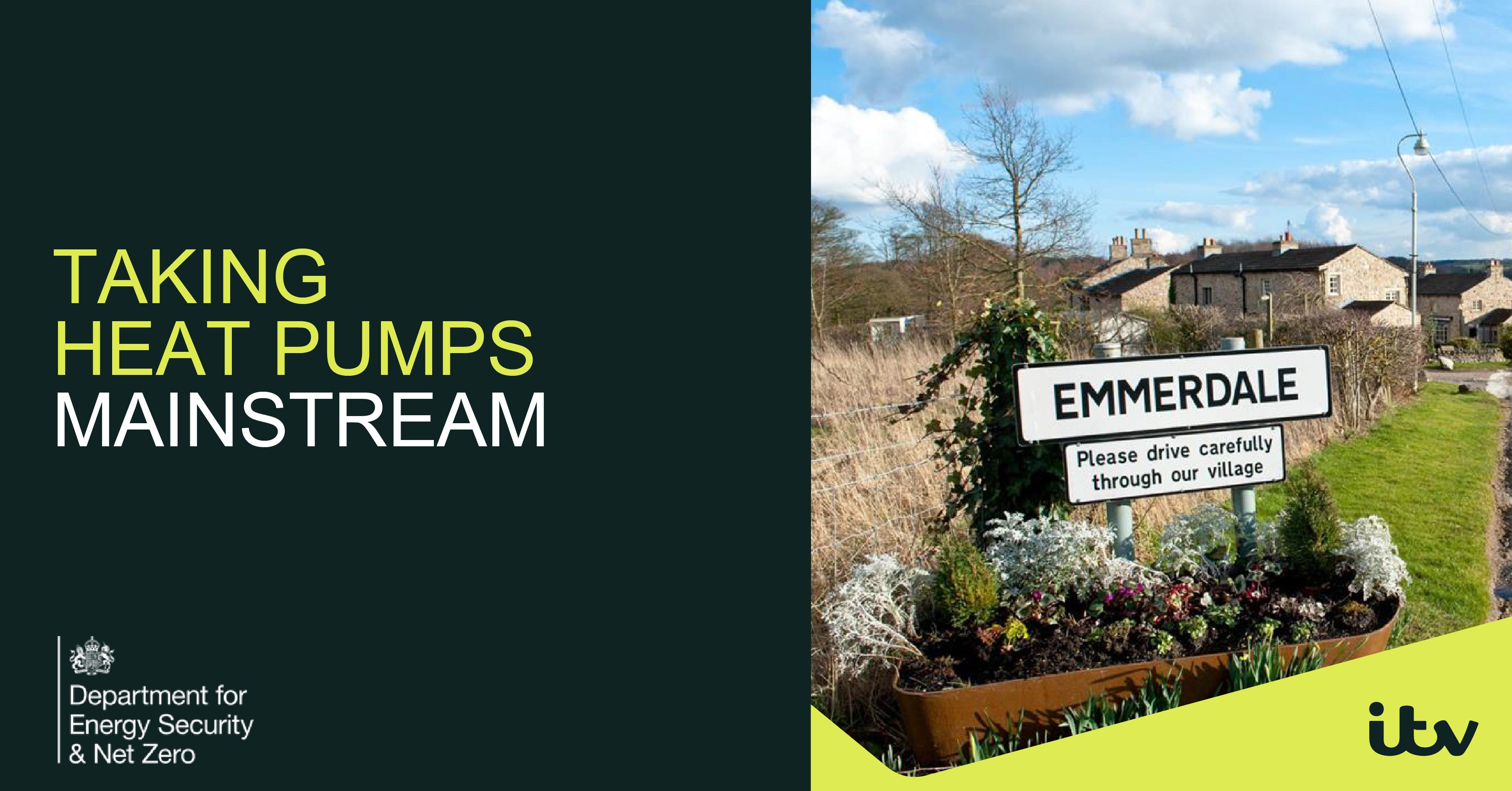
“The commercial reasons for all those working in advertising to lean into sustainability are becoming ever clearer,“ she says. ITV recently won the 2025 Campaign Ad Net Zero UK Grand Prix for work promoting heat pumps to 3.5 million viewers, created with MG OMD and the Department for Energy Security and Net Zero.
Waters says ITV is now assessing all climate-related commercial opportunities and risks to stay future-ready—sensible given the scale of regulatory and consumer pressure building across Europe.
Measuring AI’s Carbon Footprint in Advertising
AdGreen’s Carbon Calculator is adding an 11th activity area today: AI usage measurement. The feature, built with Spanish carbon data platform Hiili, lets production teams quantify emissions from generative AI tools used for text, image and video creation.
AI has turbocharged creative workflows, but nobody’s really known what it costs environmentally. The new functionality changes that allow teams to compare production strategies upfront and record actual AI use after projects wrap.
Hiili’s methodology uses peer-reviewed techniques combining large-scale internet measurement with machine learning models to estimate energy consumption and carbon emissions. One gap: water consumption isn’t included yet. Research suggests AI uses roughly 500ml of water per 20-50-word text response for data centre cooling. AdGreen is monitoring this as operators shift to more efficient liquid cooling systems.
Global Media Sustainability Framework Gains Traction
The Global Media Sustainability Framework is becoming the de facto voluntary standard for measuring media emissions—the biggest chunk of advertising’s supply chain footprint. Holding companies, platforms, media owners and brands are backing it.
Out-of-home guidance arrives in February 2026. An updated framework (v1.3) gets unveiled at Cannes Lions 2026, including a new WARC collaboration to benchmark advertising’s global impact.
The Campaign Ad Net Zero Awards saw entries jump 26% year-on-year in its fourth edition. Cannes Lions and D&AD have adopted similar approaches, baking sustainability into their judging criteria.
Meanwhile, Kantar is working with Ad Net Zero on a Sustainable Behaviour Ad Tracker, analysing its LINK ad testing database quarterly. Early data is sobering: just 5.3% of ads pretested globally demonstrate sustainable behaviour. That’s either a problem or an opportunity, depending on your perspective.
Scaling Up
Beyond its seven core chapters, Ad Net Zero is extending its reach through partnerships with the UN Global Compact, the Sustainable AI Coalition, and the Institute for Real Growth. The frameworks are also informing a new book, Sustainable Advertising: How Advertising Can Support a Better Future, by Matt Bourn and Sebastian Munden (Kogan Page).
The Every Brief Counts initiative continues providing tools to embed sustainable behaviours into creative briefs—the practical work of changing what gets made, not just how it’s measured.
At five years, the programme has shifted the conversation. Whether it can maintain momentum as economic pressures intensify and AI adoption accelerates remains to be seen. But the business case is no longer theoretical.


