
Beyond the Algorithm: How Publishers Are Fighting Back
An overview of the PPA Independent Publisher Conference, 21 November 2025
AI-driven search traffic is down sharply, with publishers losing up to 30% of their audience to AI tools. While Goalhanger built a 40-million-member community, Condé Nast receives more email than social traffic, and Black Business Magazine now relies on partnerships rather than ads. Last week’s PPA conference delivered the playbook for survival.
Goalhanger: We Don’t Chase Headlines
Jack Davenport and Tracy De Groose opened by critiquing digital media’s focus on algorithms, superficial content, and uniformity. Goalhanger’s success stems from rejecting these trends entirely.
We don’t chase headlines. We rewrite the story. The crucial quality of Bond - he leaves us wanting more.
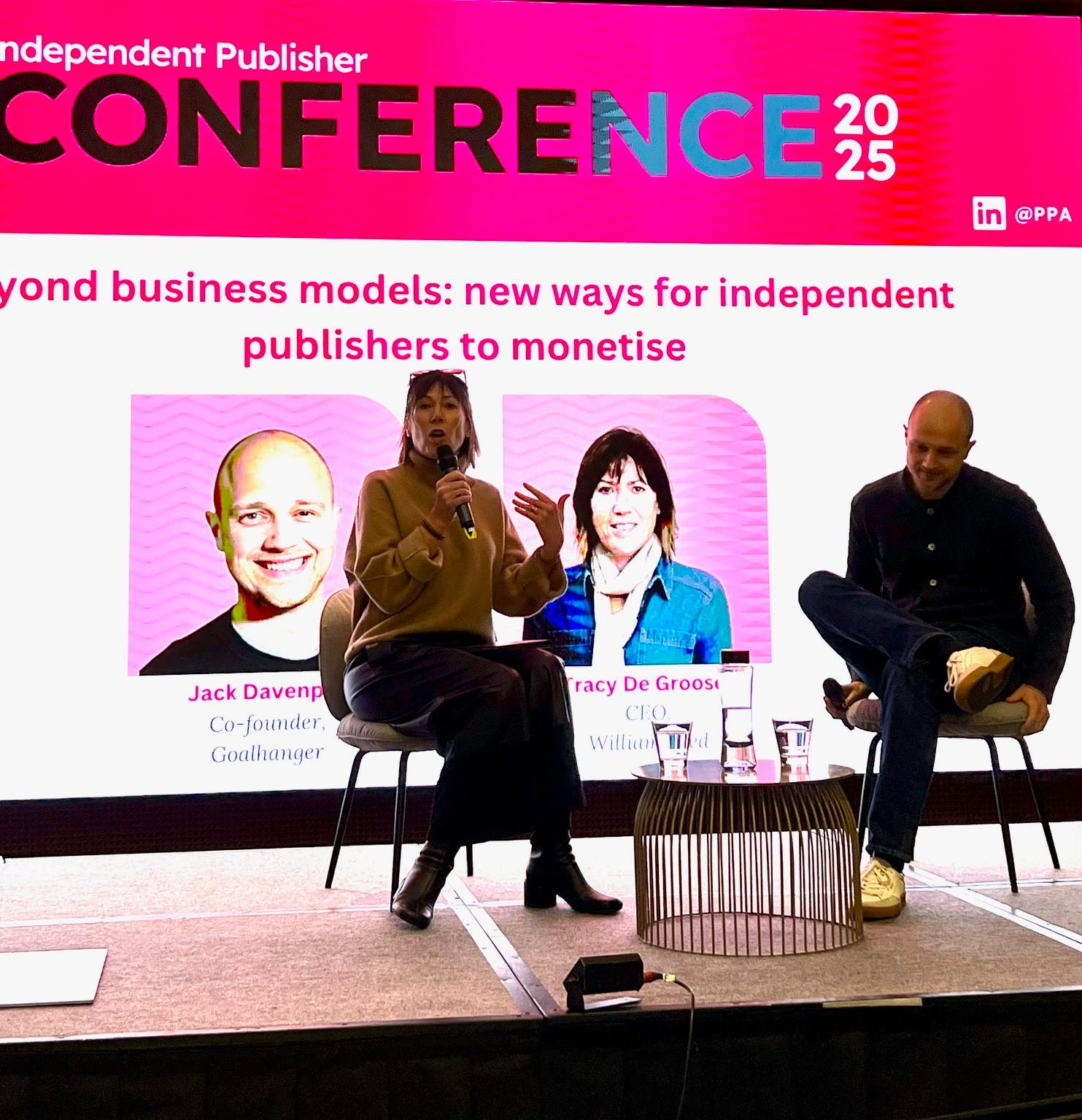
The Bond reference resonated. Craft matters - every word is intentional, pacing builds anticipation, audiences seek more. This contrasts sharply with headline driven algorithm-optimised content. Goalhanger’s 40 million-strong community, with fans engaging for up to five hours per month, reflects active participation through unique content and credible voices. Their business model spans podcasts, subscriptions, ads, video, events, and direct partnerships. Multiple revenue streams matter, but the foundation is ambitious storytelling that drives engagement.
The Traffic Problem Everyone’s Seeing
David Buttle, former head of platform strategy at the Financial Times, and now owner at DJB Consulting presented the conference’s most concerning data. ChatGPT is growing three times faster than the early internet, and Google’s competing AI features are already reducing publisher traffic.
Around 5 to 8 per cent of my traffic now comes from ChatGPT, Claude, and Perplexity. These platforms currently do not offer monetisation opportunities.
A B2B publisher’s experience echoed across the room. Early adopters grow more; late adopters plateau. When ChatGPT added real-time web access, usage rose across the board. These tools supplement Google search, threatening the traffic foundation digital publishing has relied on for two decades. Lucio Mesquita noted that generative AI is replacing site visits entirely - traditional search focused on ranking, while generative searches give direct answers.
Make Them Pay For It
Lucio Mesquita, Senior Consultant, at the Innovation Media Consulting Group advice: treat AI companies as you should have treated Google 15 years ago. Don’t repeat past mistakes.
If AI companies use your work, demand compensation, brand credit, and attribution. Make these non-negotiable in every deal.
Publishers can take immediate steps: evaluate current licensing agreements to understand if content is being used. Work with other publishers in collective licensing groups for better bargaining power. Create clear licensing frameworks for AI companies with terms for payment, attribution, and usage.
Small publishers should unite for collective licensing. With links mattering less as users get direct answers, attribution supports branding and licensing leverage. Industry frustration continues as companies like Axel Springer and News International secure individual deals with OpenAI, leaving smaller publishers susceptible to unauthorised content use.
Email Beats Social (Finally)
Jessica Crouch, Product Director of Email at Condé Nast, delivered the stat that got everyone’s attention: newsletter traffic now surpasses social media traffic. The New Yorker, Vogue, Wired, and GQ receive more visits from email than Facebook, Instagram, or Twitter combined.
Email subscribers exhibit higher long-term engagement and contribute up to 50% more revenue over their lifecycles. Newsletters drive subscriptions, advertising, and commerce at Condé. Newsletter readers are 4.5 times more likely to subscribe, and 20% of New Yorker trial subscriptions come from editorial newsletters.
Crouch sees newsletters as strategic products, not marketing tools. Each should have a business goal: driving commerce, encouraging subscriptions, or supporting retention. Wired recently introduced subscriber-only newsletters, directly competing with Substack by providing curated expertise from the brand. This has produced measurable improvements in retention.
The 80-20 Model
Justice Williams, co-founder of Black Business Magazine, presented a notably innovative business model: stop pursuing advertisers altogether. Williams launched her first magazine 16 years ago, but the advertising-dependent model failed in 2008. For Black Business Magazine, she developed a new approach: 80 per cent of revenue from strategic brand partnerships, only 20 per cent from traditional advertising and subscriptions.
We chose not to pursue advertisers. Observing influencers, we recognised the importance of relationships. What if 80 per cent of revenue could come from just 20 per cent of clients?
This model applies influencer economics to publishing: build audience and reputation, then establish partnerships with brands that support the vision. Lloyds Bank serves as their primary partner, acting as a strategic ally rather than a traditional advertiser. Twelve brand partnerships cover all operational costs before considering traditional revenue.
What AI Can’t Do
Despite concerns about AI, speakers repeatedly emphasised what it cannot replace. Machines generate words, but journalists create meaning. AI may produce many answers, but journalists ask the essential questions.
Robots do not contact sources. AI cannot gather quotes in person or conduct on-the-ground reporting.
This shift requires newsrooms to act as talent agencies, turning journalists into personal brands. The Financial Times and The Economist now highlight journalists’ personalities. Newsletters from named authors have led to up to 15% increases in sign-ups, underlining the value of recognisable journalists.
What Actually Matters Now
After two days of sessions, key priorities emerged. License content aggressively and collectively - AI companies require quality journalism and publishers gain leverage by acting together. Build human connection and develop journalist personalities, as authenticity outperforms algorithm optimisation. Diversify revenue beyond advertising and subscriptions.
Maintain direct audience relationships through email, as Condé Nast’s transition from social to email indicates future trends. Use AI to enhance, not replace, editorial work. Recognise that each platform requires a tailored strategy. Test rigorously and learn quickly from failures.
Publishers must resist content extraction as they develop new business models. Protect content while experimenting with AI, and uphold editorial values while pursuing commercial innovation. The key question is not whether traditional media will survive, but whether publishers can act collectively and swiftly enough to shape the future rather than be shaped by it.
To create immediate momentum, within a week, publishers should form or join collective bargaining groups to negotiate fair compensation and licensing terms with AI companies. The necessary tools are available, and the conference provided a clear roadmap. Effective implementation is essential, and time is limited.
You can read the full conference report here:
Email Over Social, Licensing Over Free Content: The PPA Conference Playbook - Overview of the PPA Independent Publisher Conference, 21 November 2025
AI-driven search traffic is down sharply, with publishers losing up to 30% of their audience to AI tools. While Goalhanger built a 40-million-member community, Condé Nast receives more email than soc…


This article comes at the perfect time; given the rapid growth of generative AI, how do you see publishers scaling these engagement-first strategies effectively? Your insights are truly valuable.
The Conde Nast stat about email surpassing social trafic really stands out. I've seen this trend building for a while but didnt realize how far it had come. What strikes me is how the 80-20 partnership model from Black Business Magazine could work for smaller publishers who dont have the brand power yet. Do you think collective licensing is realistic when individual publishers are still cutting their own deals with OpenAI?