



Most people entered this industry because of their creativity. The uncomfortable question, ten months into Ndidi Oteh’s tenure as Chief Executive of Accenture Song, is how much room is left for it. Her answer, delivered in a recent joint appearance with Creative Chairperson Nick Law, was unequivocal: plenty, but only for organisations that treat creativity as a discipline rather than a department. Disciplined creativity, applied across every part of a business, is, in their telling, the difference between being valuable and being replaced.
That framing is worth taking seriously, not because it is novel (consultancies have been promising to operationalise creativity for a decade) but because of who is making it and at what scale. Accenture Song is, by revenue, the largest creative business in the world: $20bn in its 2025 fiscal year, up from $12.5bn when David Droga took charge four years earlier. When its two most senior figures set out a doctrine, they are describing how a meaningful share of global marketing, commerce and experience spend will be organised.
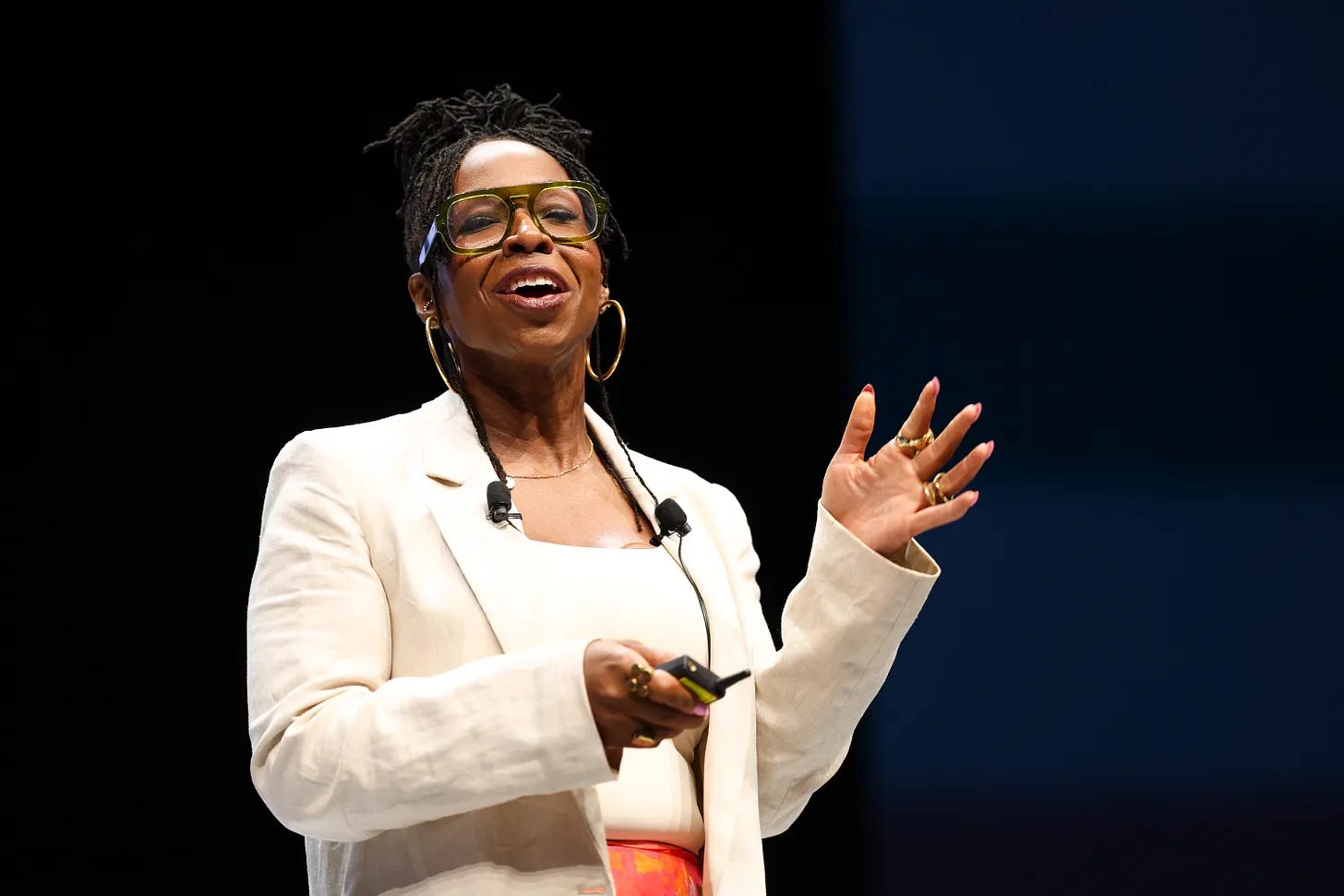
The company, not the CEO
Oteh took over from Droga on 1 September 2025, after 14 years at Accenture and, from late 2023, a stint running Song’s Americas business. She has been careful not to position herself against her predecessor, describing him as a mentor and team builder with a habit of taking on what everyone else called impossible. Droga has moved upstairs to become Accenture’s Vice Chair; the succession was orderly, and the strategy is continuous.
Around a decade and a half ago, she recounted, Accenture concluded that technology was reshaping how consumers live, learn and socialise, and that it wanted to own the consequences. It began buying and building creative capability under the Accenture Interactive banner, established in 2009: Fjord, Karmarama, The Monkeys and, in 2019, Droga5, the deal that signalled the ambition was serious. In 2022, with Droga newly installed as Chief Executive, Interactive and its more than 40 acquired agencies were stitched into a single brand and renamed Accenture Song; only Droga5 kept its name. The point, Oteh stressed, was never to assemble a holding company in miniature. Accenture set out to be neither a consultancy with an agency bolted on nor a technology firm that dabbles in advertising, but one integrated business spanning marketing, sales, commerce and service.
That integration is the product. Song’s pitch to clients is what Oteh calls harmonised consumer experiences: the same brand behaving coherently across every touchpoint, all the time, rather than in campaign-shaped bursts. “Technology has always needed creativity, and creativity always needs technology,” she argued. The companies that fuse the two with intention, in her view, are pulling away from those that do not, and the gap is compounding. It is a tidy inversion of the usual anxiety: rather than technology eroding creative value, Song’s case is that technology has made creative judgment scarcer and therefore more valuable, provided it is wired into the whole enterprise.

