



Readly has signed a distribution deal with EE that places its catalogue of more than 5,000 magazines and newspapers inside EE One Up, the rewards programme for EE One customers who take broadband and mobile from the operator together. EE puts the programme’s reach at over a million households.
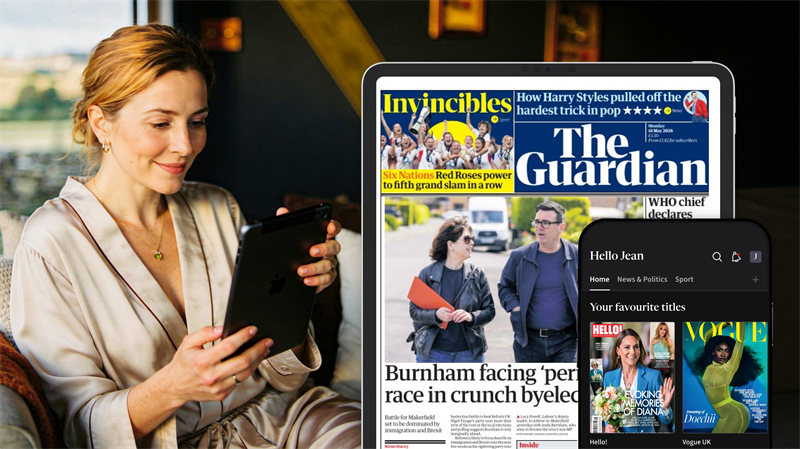
Those customers get what the two companies call an extended period of free access to the Readly app. No duration is given. The catalogue includes The Guardian, Empire, Stuff, Edge, Women’s Health, Radio Times and Auto Express, covering news, entertainment, technology, gaming, health and motoring.
The deal is the first significant UK announcement since Cafeyn completed its acquisition of Readly’s business outside the Nordics in April. That transaction left the French group with combined revenues of nearly €100 million across 15 markets, 2.5 million users, and more than 5,200 publications from 1,100 partner publishers, and Cafeyn said at the time that it wanted to consolidate its position in key markets, notably the United Kingdom.
A retention play for EE, a UK foothold for Cafeyn
For EE, the arrangement is retention. One Up is where the operator parks the third-party perks meant to stop those converged households shopping around. Journalism joins that list, and its job is to cut churn.
Cafeyn’s interest is distribution. The group describes a hybrid B2C and B2B2C model: direct subscriptions on one side and, on the other, wholesale deals in which a telecom operator or digital platform pays to hand access to its own customers. It has built such partnerships across Europe, and the EE deal applies the pattern to Britain. Cafeyn’s pitch to operators is engagement and loyalty; to publishers, it’s that the wholesale fee enables it to reach readers they could not reach alone.

“Partnering with EE, one of the UK’s leading consumer brands and subscription platforms, is an important milestone for Readly and Cafeyn Group. It also reflects the growing role trusted editorial content can play in helping telecom operators create deeper customer engagement. Together, we aim to make high-quality journalism more accessible to millions of UK consumers through a seamless and highly valued experience.”
Laurent Kayser, CEO at Cafeyn Group
The publisher is paid for a reader it never meets
Several numbers are missing from the release. There is no figure for what EE is paying, no split for publishers, and no indication of what happens to One Up customers once the free period ends: whether they are asked to pay Readly’s standard rate, whether EE funds continued access, or whether the offer lapses. No conversion expectation is set.
EE holds the customer and the billing relationship. Readly holds the app, the reading data and the personalisation layer. The publisher holds a share of an undisclosed fee and a title on a shelf beside 5,000 others.
A million households are reached. Whether any of it survives the end of the free period as paid reading is the number nobody has offered.
