




“You will read more about Australia than you will about Indonesia,” Duncan Hooper says. “Indonesia is the fourth largest country in the world... It’s virtually a major power.” Yet in the British press it surfaces only when there are floods, or a story involves holidays in Bali. “We’re still in this world where you are expecting news from these countries that you haven’t heard of to either be a war or a coup or a natural disaster.”
That blind spot is the business case for Global South World, the digital publisher Hooper serves as Consulting Editor. Founded in 2023, it covers the emerging economies of Africa, Asia and Latin America (for readers in those countries as much as for the West) on the theory that media’s energy has moved to places with young populations and growing markets while Europe’s industry contracts and turns inwards. “I don’t want to say it’s moribund. That’s not fair, but it’s facing major challenges,” he says of the business he came up in.
Hooper’s route to that conviction runs through most of British media. His first job was at J.P. Morgan, “and I hated it,” he says. “I noticed there were these things called Bloomberg terminals, and I saw this news on these things, and I thought, wow, I bet not many people who are graduating in English know that Bloomberg terminals exist and that this is a company that does news. I applied to all the normal places and got rejected from all the normal places. And I wrote to Bloomberg, and they gave me a job.”
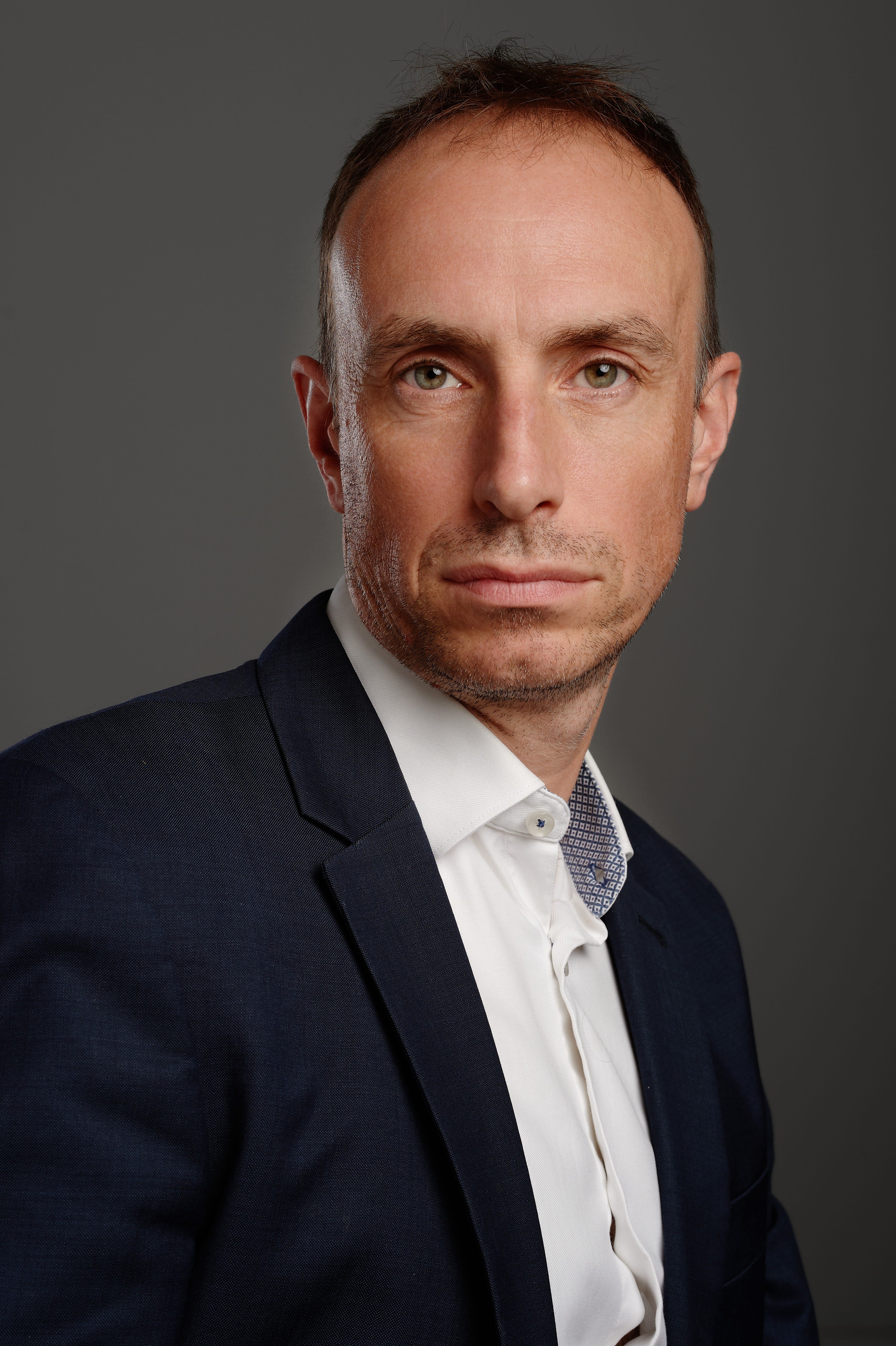
From the newswire he moved through Euromoney magazine, the Telegraph’s digital operation, MSN, Euronews (where he set up Africanews, the first bilingual pan-African television channel) and CGTN, the international arm of China’s state broadcaster. That last posting shaped the thesis behind Global South World. “One thing about China is it’s very interested in the whole world,” he says. Working alongside colleagues from across Asia, Africa and Latin America showed him development that Western newsrooms barely register: “The numbers are just frankly astonishing in terms of the proportions of people who are firstly being brought out of poverty, but then also being brought up into the middle class... And they need information. They need reliable, credible information.”
The coverage that does exist skews grim, and Hooper thinks the gap between perception and fact has widened. In a recent quiz, he asked what has happened to forest cover in China over 20 years; it has roughly doubled. Costa Rica has rebuilt decimated rainforest into a national asset. “There are a lot of positive stories coming out of these countries,” he says. “And I don’t think those stories get heard enough.”
The only person in the UK is the consulting editor
Global South World sits within the media division of Impactum, alongside the French analysis site Atlantico (fifteen years old this year, and subscription-funded), the social-first brands The World in Maps and World Visualised, and Mondance, a recently acquired dance sport app. Hooper describes his own role as “a troubleshooter”: strategy, product, hiring, training, analytics, “wherever I’m needed.”
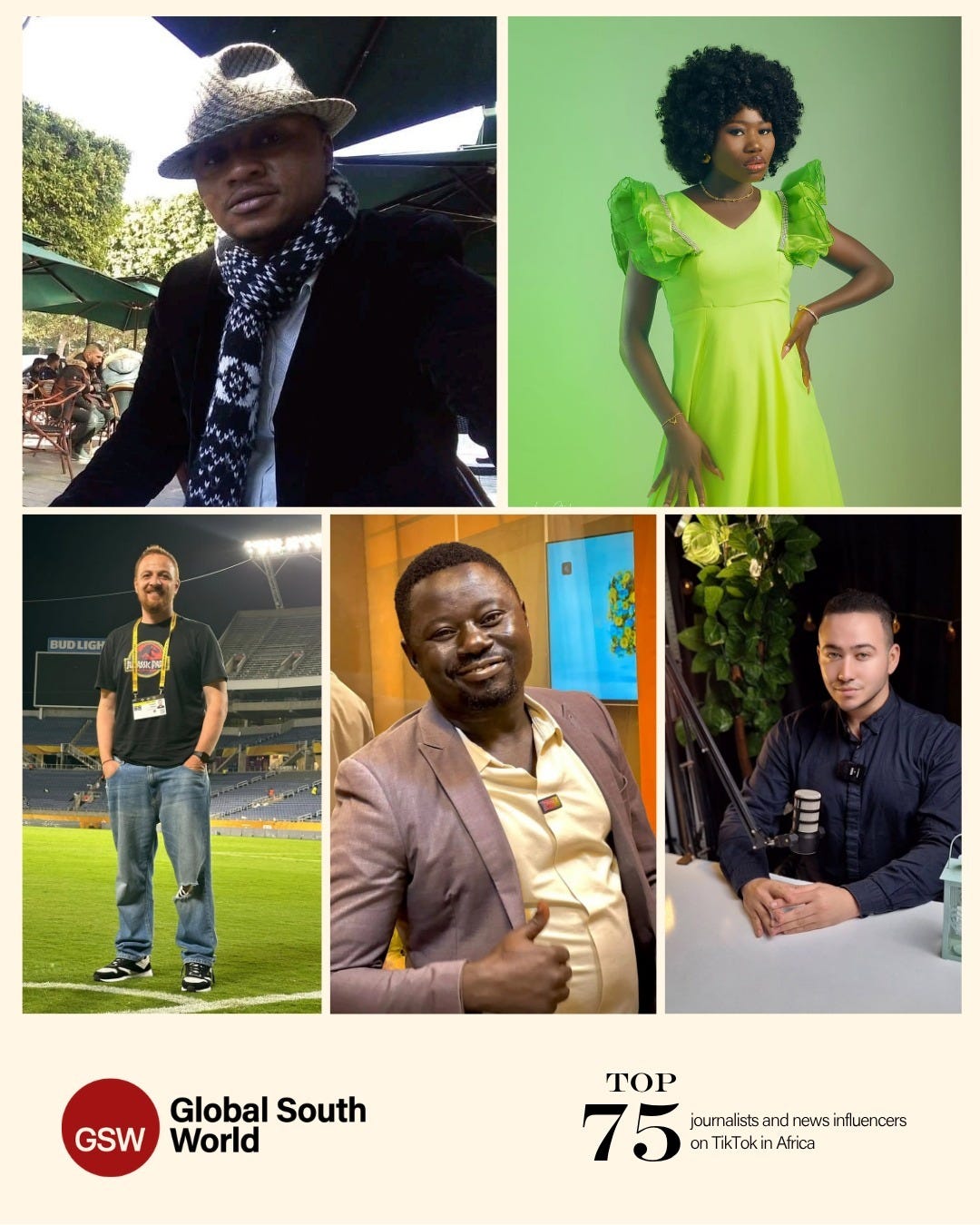
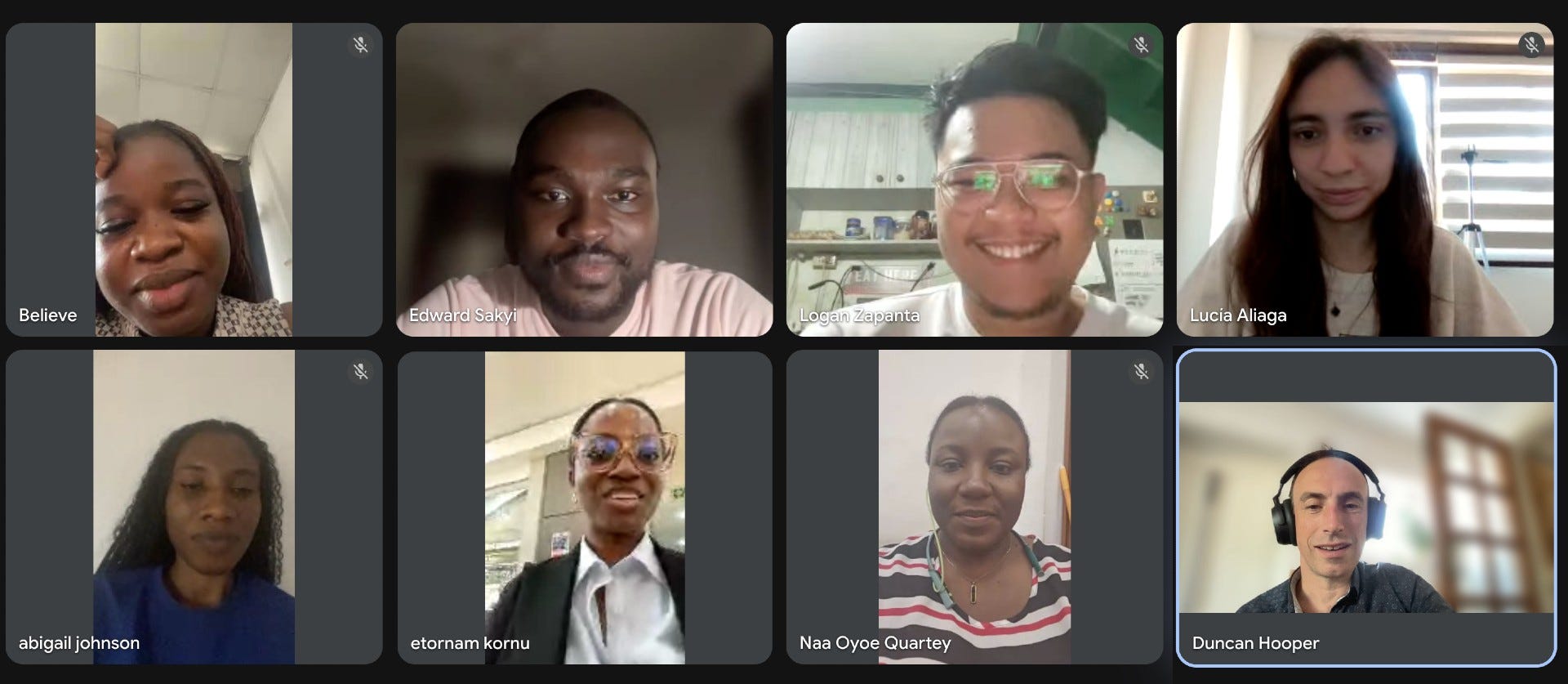
He is also, deliberately, the only person in Britain. “None of the other staff are based in the UK. It was a very conscious decision that we wanted to work with people from the countries that they were reporting on.” Editor Edward Sakyi runs the site from Accra with a team of around six; a correspondent in Manila covers Asian hours; a colleague in La Paz does the same for Latin America. Around that core sits a looser network of news content creators on LinkedIn, mainly ex-journalists, providing perspective from their own countries.
Distribution follows the audience rather than the desktop homepage. The group’s younger brands are vertical, mobile-first sites designed for minimal friction, because Hooper believes the subscription model that sustains Atlantico is out of reach for a new brand. “If you have a younger media, it’s very, very hard to grow on that model. So we feel that you need to grow through social media.” A Portuguese-language edition launched in Brazil in early July, built with Giraffa Tech, the group’s media-tech partner, with further translated editions in testing.
The audience skews educated: people in international business, or those whose English marks them out. The US tops the analytics, how much of that is VPN traffic is hard to say, with big audiences in Indonesia, Nigeria and South Africa. The appeal, Hooper argues, is the outside perspective itself. When the site covers Ethiopia, Ethiopians read it. “They like to see how the rest of the world is talking about us, and they don’t see it enough.”

This disruption will be bloodier because nobody has reserves
Hooper lived through the first digital disruption at the Telegraph. “We went after page views. We wanted to be the biggest.” He thinks the AI wave will cut deeper. Not worse, he insists, but “more transformative, more disruptive,” for a structural reason: last time, incumbents had fat to burn. Media companies “were much better able to respond because they had reserves... to do some experimentation, to take their time a little bit to adapt, to take some hits, to get it wrong.” Few now have that cushion.
His own newsroom has no such cushion. “We don’t have an AI specialist who’s going out on the frontier. We’re not building our own models. At the same time, the off-the-shelf models are fantastic for us.” He has Claude pulling YouTube statistics weekly and analysing which categories and video lengths perform; AI generates ideas from past performance, assists photo montage work, and error-checks every article before publication, a discipline introduced after writers covering unfamiliar countries made “silly mistakes”. Abstaining was never an option: “We would just not be able to run our business effectively.”
The threat is just as concrete: competition from fully automated content, and advertising inventory that becomes “infinite, basically”. What worries him most is the licensing economy forming above his head. AI content deals are being struck with the biggest publishers, and it is easier for an AI company to sign Le Monde and the Guardian than to do “500 deals with smaller publishers”. He wants collective mechanisms (he cites the licensing standard RSL) to make sure the smaller layer of publishers, “who bring the diversity... who bring the plurality that we all agree that we want in media”, are not left without a seat at the table.
Plurality, not impartiality
Much of Global South World’s patch is served by media owned by mining companies or political interests. Ask Hooper how an impartial outsider reports on that, and he declines the premise. “I think everybody comes with certain biases in their reporting,” he says, noting that Britain has its own political and advertiser influence over media, merely with stronger regulation and, crucially, more plurality. Nor does he think claiming neutrality helps: “Organisations that we would say are being impartial over here in the UK are not seen as being impartial in other parts of the world.” Western coverage of Ukraine, he points out, looked anything but neutral from the global south. “It does endanger your credibility if you try to claim that you’re able to do that.”
His remedy is disclosure and competition rather than prohibition. A mining company owning a news organisation is not, for him, the scandal: “I think it should be explicit that the media organisation is owned by the mining company. People should be able to make their own decisions about it.” The real danger, he argues, is big tech deciding which outlets get paid and which get seen, killing off the blogs and niche sites the open internet allowed.
TikTok is his case in point: his biggest platform, and the one that refuses his money. “You want me to rank the social media sites by how bad they are?” he says, when asked whether it is worse than Facebook. Facebook pays a little; TikTok pays nothing, excluding the brand from its creator programme because news footage of world events is deemed “unoriginal”. Its moderation systems flagged his own interview with an Indonesian minister as unoriginal, blocked a genuine video as AI-generated, and in Brazil blocked the company’s paid advertising over a light-hearted graphic elsewhere on one of its sites. “I’m not asking them to pay for it, even. I just want them to allow us to pay to give their audience the news.”
The business plan is deliberately slow: emails collected but no newsletter yet, an ad-funded model, a low-cost base and self-funding within two years. By 2029, Hooper wants Global South World to be a recognised name in Brazil, South Africa, Nigeria, Ethiopia, Egypt, Indonesia and the Philippines: on its site, its podcast, WhatsApp, YouTube, “even if they’re reading us on an AI platform... We’re platform neutral.”
First, the plainer target: “I want to be still around.”
Great piece. And Duncan's spot on, "Organisations that we would say are being impartial over here in the UK are not seen as being impartial in other parts of the world.” Really enjoyed reading the feature and I wish him all the best, especially, “There are a lot of positive stories coming out of these countries and I don’t think those stories get heard enough.”