



The first Future Media Series forum opened on 20 October in the Agence France-Presse building on the Place de la Bourse, two days after riots in the capital had shaken the country, and nobody pretended the afternoon was about anything other than money. The slogan on the stage ran “regulation, revenue, renaissance”. The promise was that everyone would leave with a route to a cheque. Four hours later the room had a reasonably clear map of where the cheques come from, and a much less clear idea of whether the map survives contact with AI.
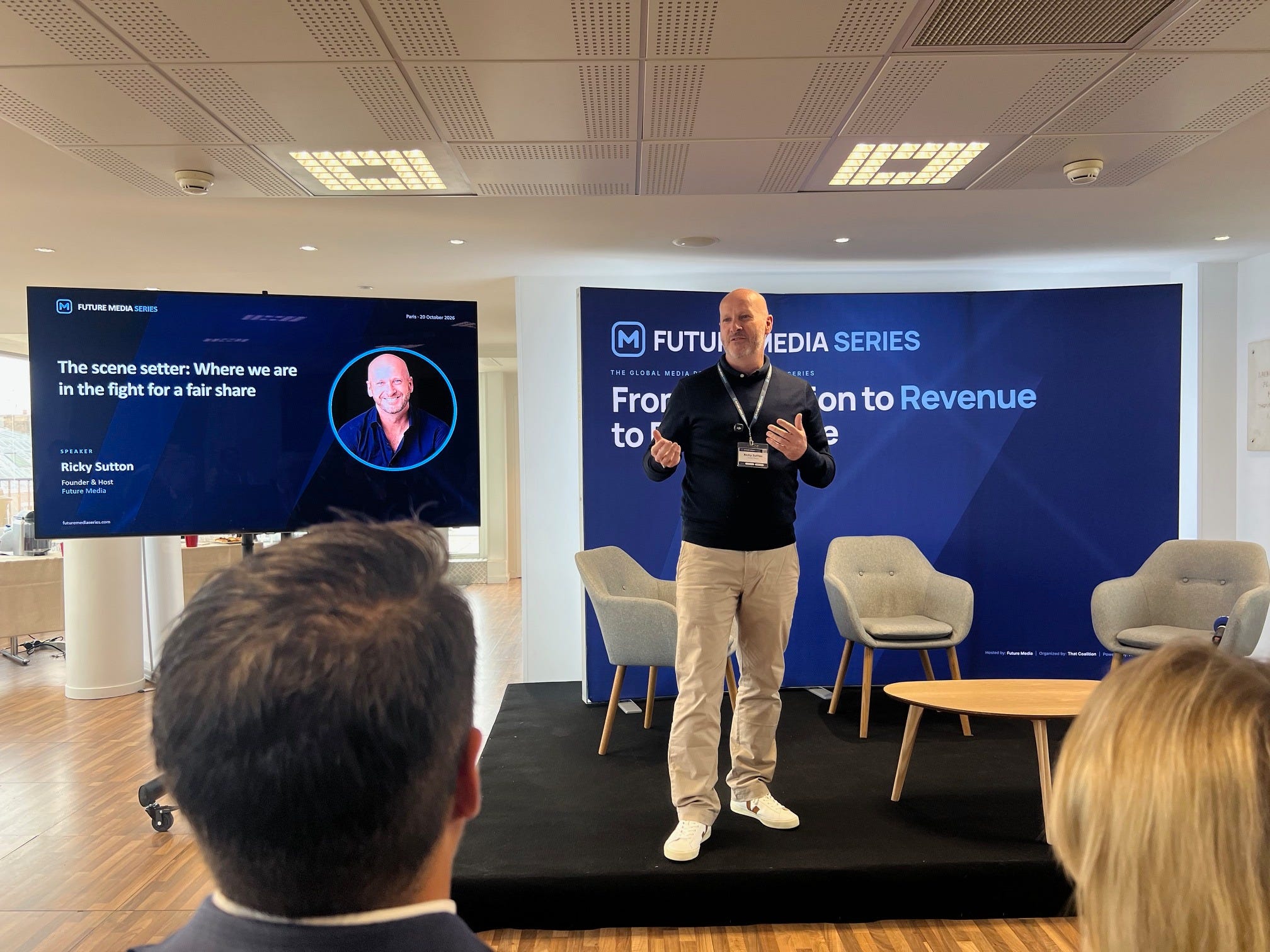
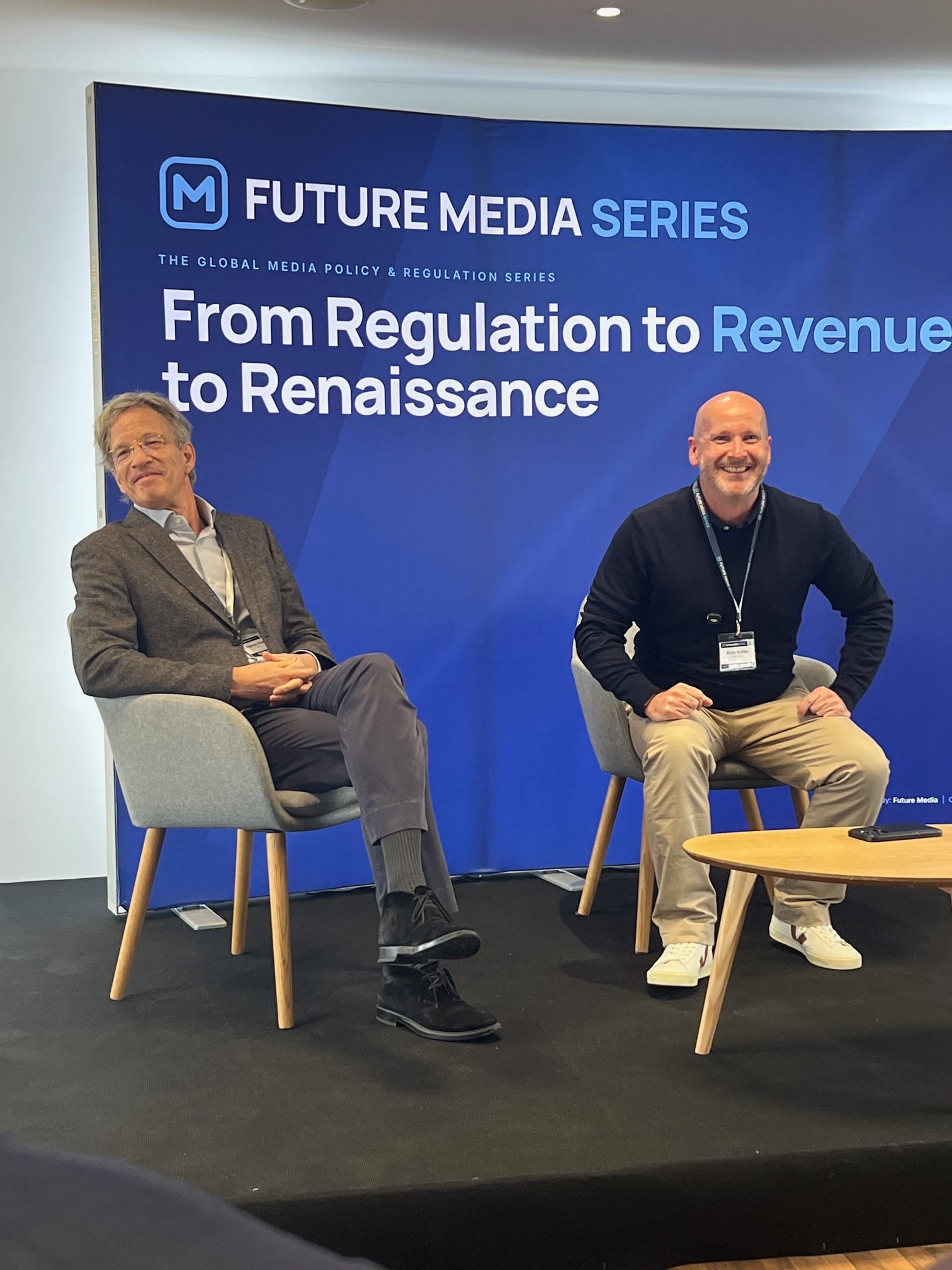
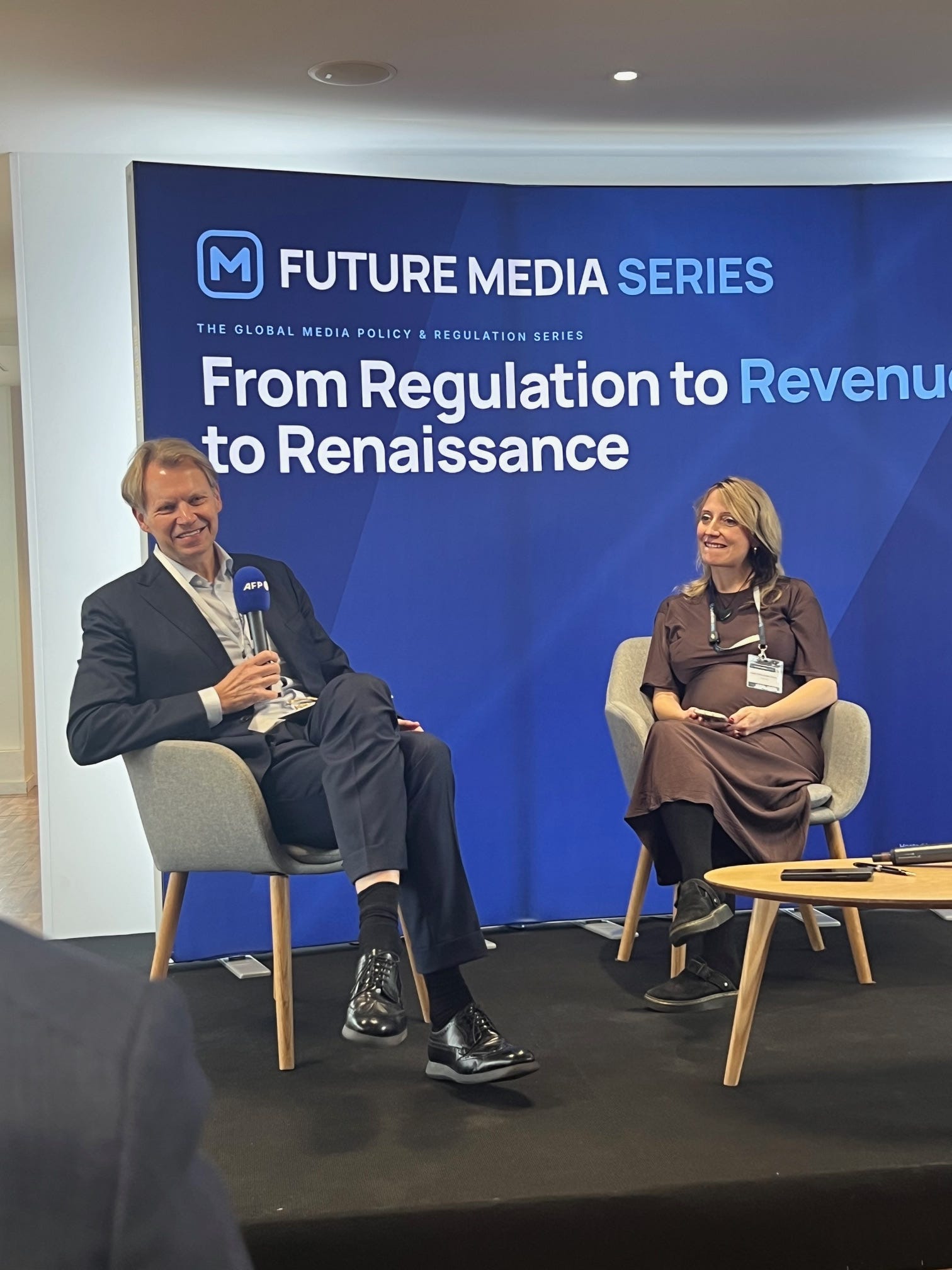
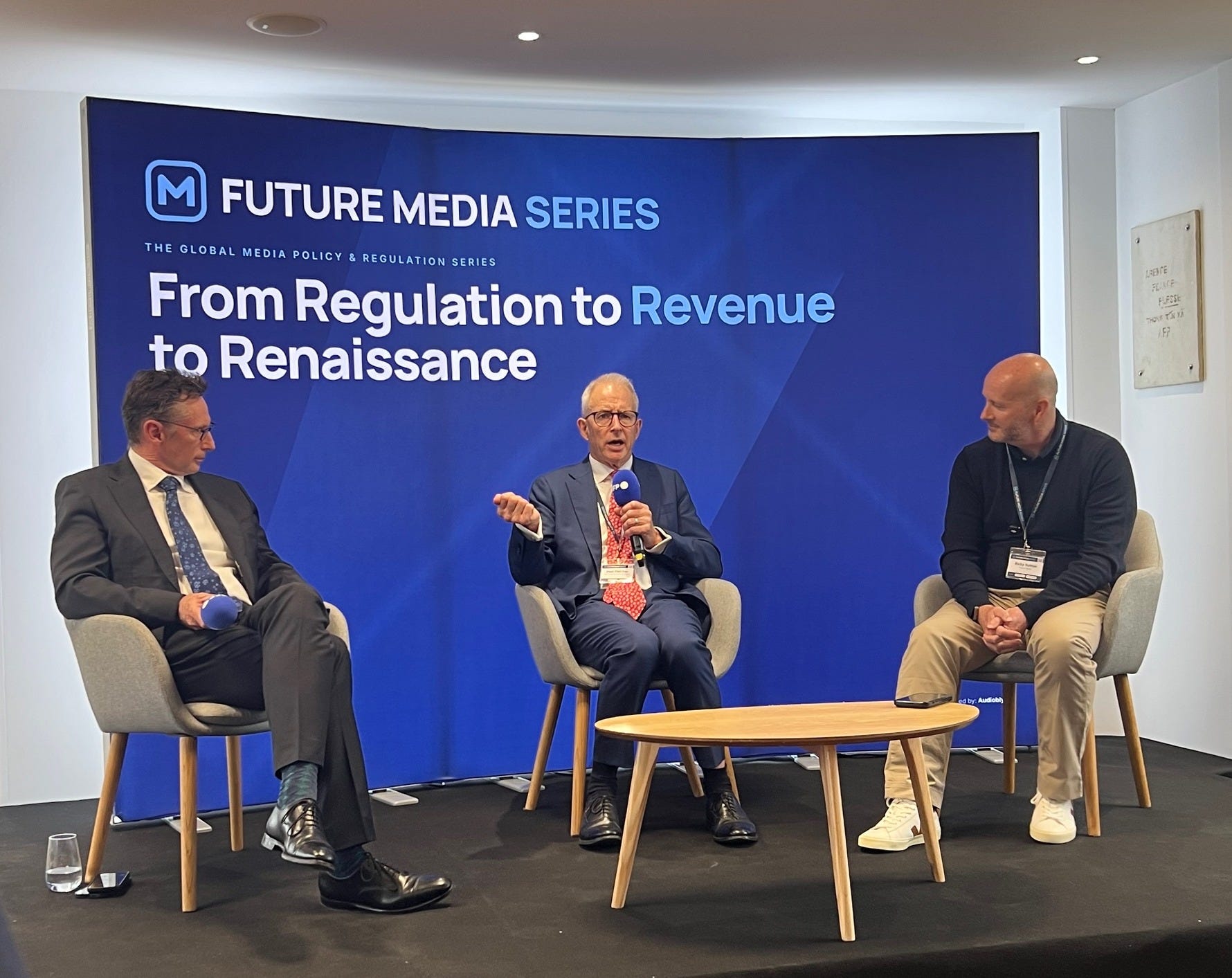
The programme was built for that question: Fabrice Fries, Chairman and Chief Executive of AFP; Damien Geradin of Geradin Partners; Mikaël Hervé of Charles River Associates; Paul Fletcher and Stephen Jones, Australia’s former Communications Minister and former Assistant Treasurer; Pierre Petillault of the Alliance de la Presse d’Information Générale; and Elena Perotti of WAN-IFRA, with Ricky Sutton hosting and Lexie Kirkconnell-Kawana of Impress in the chair. Every session ran under the Chatham House Rule: the names above are the programme’s, and nothing that follows is attributed to any of them.
Competition law got publishers paid. Copyright on its own did not
France and Australia reached the same conclusion by different routes. Spain tried a copyright-based link levy in 2014; Google closed Google News and paid nobody. France wrote the 2019 EU copyright directive into national law and then took the fight to the Autorité de la concurrence, the French competition authority, which fined Google €500m in 2021 and a further €250m in 2024 for failing to negotiate in good faith. Australia skipped copyright entirely and had its competition regulator write a bargaining code after an 18-month inquiry into Google and Facebook.
The logic, as put from the stage, is that a copyright argument invites a platform to dispute the value of every extract indefinitely. A competition argument asks a simpler question: may a dominant company neutralise a legal right by refusing to negotiate? Framed that way, the stock defences stop mattering. We send you traffic. A snippet is worth nothing. Neither answers the question. As for what the competition route is worth, the French press reported the week before an ICC arbitration award requiring Google to pay French magazine publishers around €80m a year. Google is contesting it.
Nothing moved without a prime minister, and nothing stuck without a backstop
Both countries had a head of government in the meetings. In Australia, Google threatened to pull search from the country; the Prime Minister met Microsoft’s Chief Executive, in full public view, and the threat evaporated. Meta then switched off the Facebook pages of Australian news outlets, and a state health department’s for good measure, which united a divided parliament behind the bill. The design feature that made the platforms sign was final-offer arbitration: each side submits a number and the arbitrator picks one. The platforms concluded it would hold up in court, and deals estimated at more than A$200m a year followed.
Then Meta stopped paying in 2024. The government of the day chose not to force arbitration, judging that the small publishers who depended most on Facebook would be the casualties if it pulled news entirely. Instead, it legislated, in August, a charge of 2.75% of Australian digital advertising revenue on the largest platforms, offset at 150% for money spent on news deals and 200% for deals with small and medium publishers. Call it an incentive; the mechanism is tax law. Whether Meta should instead have been designated under the code, and the original leverage tested in court, was openly disputed on stage, with the ease of people who have had the argument before.
France is drawing the same lesson. Five years of good-faith obligations have not produced enough agreements, nor kept all of those signed, and a bill giving the regulator Arcom an arbitration role has passed both chambers of parliament and awaits final adoption. Without a backstop, as a line that recurred across sessions had it, you talk forever.
Strength in numbers, and the deals that give it away
Divide and rule is the platforms’ first move everywhere. In France, the directive had barely become French law before three national titles signed individual deals with Google. The collective came later and did better, on a model of collective bargaining with individual licences: the alliance negotiates, each publisher decides whether to sign. The same sequence is now repeating with AI. A handful of one-to-one deals exist, and the room was warned that some AI pilot agreements hand over an entire archive for a modest fee and a release clause.
The money on the other side of the ledger is now large enough to make unity attractive. The route to a cheque runs through litigation funders, who carry the cost of a competition damages claim in return for 20 to 25% of the proceeds, and a special purpose vehicle that keeps a publisher’s name off the pleadings. Group claims against Google’s ad tech business are in train in the Netherlands (56 publishers, €2.6bn) and the UK (about £13bn, on behalf of the whole industry). The fear of retaliation, raised from the floor, was judged to be fading: there is safety in numbers, and judges read the newspapers. Competition law draws one line: a collective damages claim is fine, a shared valuation methodology is fine, a collective boycott is a cartel.
The platforms alone know what the content is worth
The valuation argument reduced the problem to two asymmetries. Platforms have more bargaining power, because no single publisher is indispensable to them and the reverse is not true. And platforms have more information: they alone know the audiences, the engagement and the revenue that news generates. Valuation, on this account, is an empirical question, and the right counterfactual is what Google loses if all news disappears, not what it loses if one title does. Both asymmetries widen when the product is an answer rather than a link.


The value has moved from links to answers
Every mechanism described during the afternoon was designed to price a link or a snippet, and the argument from the stage was that this world is ending. Summaries and chatbots blend thousands of sources into an answer that replaces the click, shifting the value from an extract to a publisher’s entire output. French publishers have already complained to the competition authority about AI Overviews launching without any negotiation.
Australia’s new incentive does not cover AI platforms at all, and a question from the floor about whether Canberra is softening on copyright to attract data-centre investment drew the reply that Australia’s glass is three-quarters full when most countries’ stand empty, and no denial of the rumour. WAN-IFRA research cited on the day put newsroom AI adoption at 80%, up from 40% a year earlier, with few publishers seeing any route to revenue and most seeing search referrals fall. Opt-outs, nobody on the panel disputed, do not work.

The mood has turned, and that is the renaissance case. Threats of a return to the Stone Age no longer frighten legislators, even if American tariffs still do, and the platforms’ standing with voters, and by extension with judges, has collapsed. The case against is that a decade of regulatory engineering has produced a machine for pricing something that is disappearing, while governments legislate in cycles of years and the thing being priced changes every quarter.
Three-quarters full, then, for a glass that is draining.
Thanks for the shout out John :)