



A new burst of the ASA public awareness campaign went live on Wednesday across television, digital, out-of-home, radio, cinema, press and magazines. It runs for eight weeks, and none of the media was paid for.
Thirty-one organisations have donated the inventory, among them Channel 4, ITV, Sky, Google, Meta, TikTok, Spotify, Reach, News UK, Telegraph Media Group, Mail Metro Media and Ocean Outdoor. Leith was the creative agency that worked pro bono. WPP Media’s EssenceMediacom donated the planning. The Advertising Association says many media owners have significantly increased what they give.
Ten points of trust, and a recovery the AA itself calls fragile
Since the campaign began in 2022, public trust in advertising has risen from 30% to 40%, a five-year high, according to ASA research from October 2025. The industry’s supporting statistic is the one that keeps the donations coming: people who have seen or heard the campaign ads are twice as likely to trust advertising as those who have not. Previous figures from the Credos Trust Tracker, 2025, indicate that 25% of consumers distrust advertising, down from 29% and 33% of consumers who neither trust nor distrust advertising.
The AA’s language about the recovery being fragile is not modesty. It is an accurate description of a ten-point gain that took four years and could be given back faster than that.
The two new names say something about where regulation is least visible
Netflix will run the 30-second advert on its ad-supported plan. Waitrose will carry a bespoke ASA advert in Your Week In Food, the newspaper handed out in its stores. Both are additions worth more than their reach.
Netflix’s ad tier is a young inventory pool populated by viewers with no habit of thinking about who polices what appears between programmes, and streaming is precisely the environment where the assumption of regulation is weakest. Waitrose puts the regulator’s name in print in-store and within a few feet of the purchase decision.
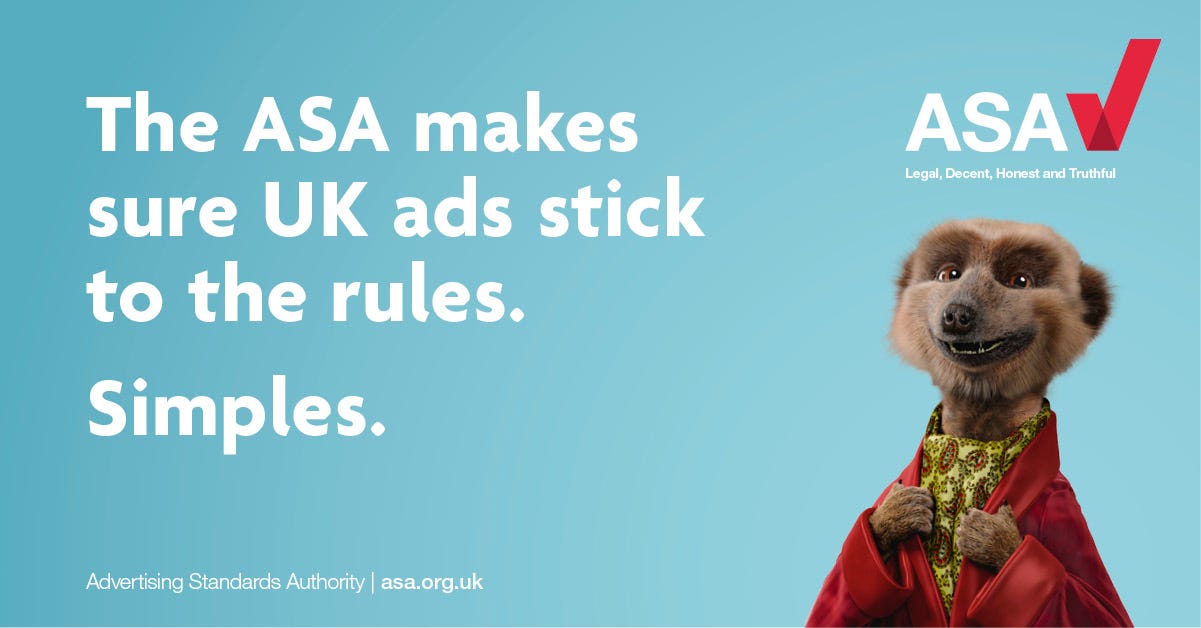
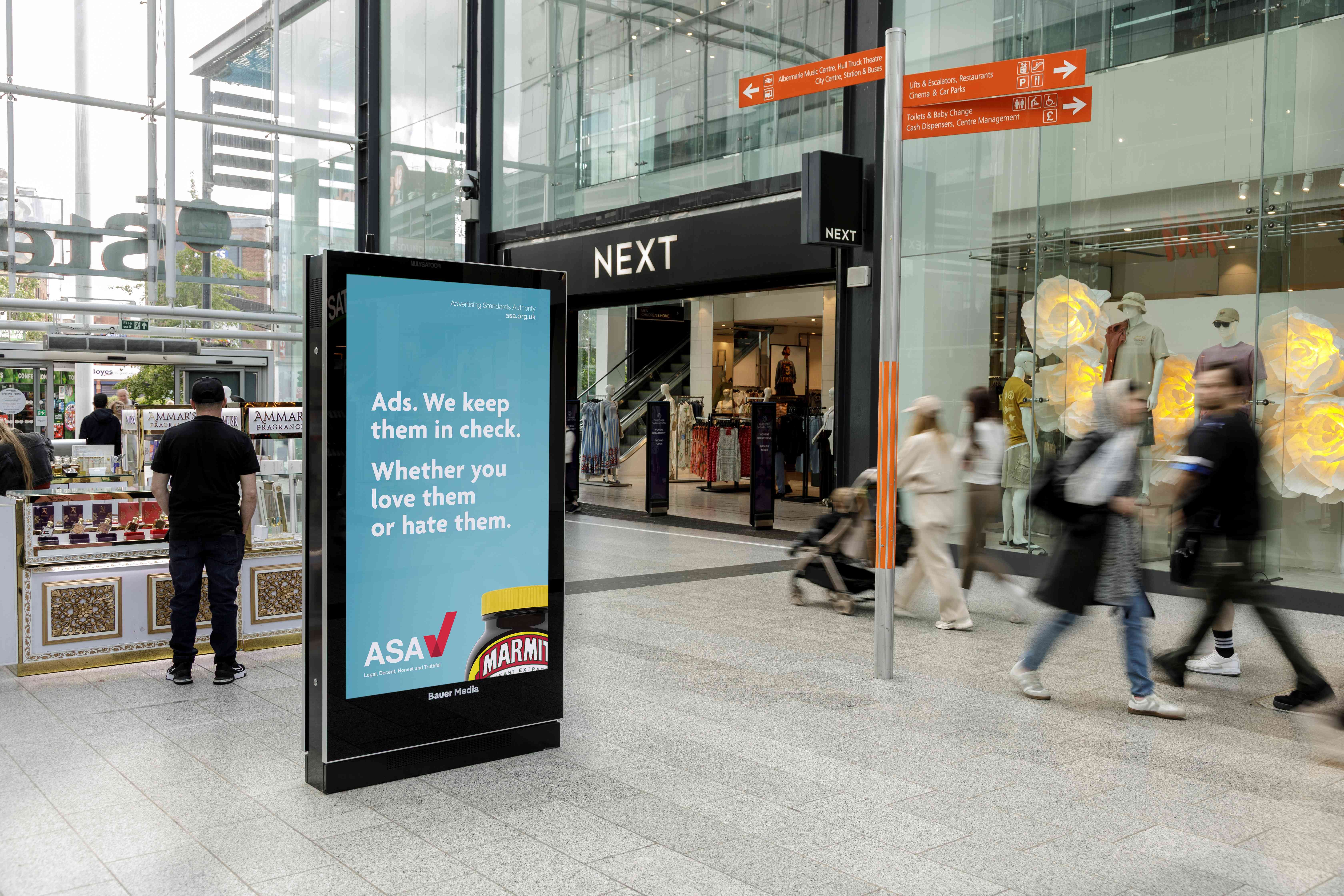
Returning brand partners Churchill, Compare the Market, Marmite and Tesco have again lent their straplines to the campaign creative. Aleksandr the meerkat features in the updated television advert.

“Our purpose is to help make great financial decision-making a breeze for everyone, so customers are at the heart of everything we do at Compare the Market. We’re delighted to lend our much-loved meerkat Aleksandr to the ASA’s latest campaign, helping to deliver the important message that advertising is a regulated industry.”
Tom Wallis, chief customer officer of Compare the Market
The regulator being advertised is not the one doing most of the work
In 2025, the ASA resolved over 40,000 complaints about 25,397 ads, and 22,383 ads were amended or removed. Its AI-powered Active Ad Monitoring system processed 60 million ads. The shift is deliberate and documented in the ASA’s own annual reports: in 2012, 5% of its regulatory resources went to proactive work; by 2024, proactive cases accounted for 59% of its casework.
The complaints process is what the campaign asks the public to believe in, and it is a rounding error against the volume the machine now handles. The ASA has quietly become a monitoring operation with an attached complaints desk. Nothing in the creative reflects that, and there is no obvious reason it should. Reassurance and accuracy are pulling in slightly different directions.

“Advertising is part of everyday life, so it’s important people know we’re working to make sure ads are legal, decent, honest and truthful. This campaign plays a vital role in raising awareness of the ASA and our role in ensuring ads are responsible, which in turn helps build trust in the advertising people see. We’re hugely grateful to the brands and media owners supporting the campaign again this year and particularly pleased to welcome some new partners on board.”
Miles Lockwood, director of complaints and investigations at the ASA
Action 1 exists because the second century opens under review
The campaign is the first item on the Trust Action Plan the AA launched in Westminster in July, which called on the industry to scale it up. Scaling up a campaign with no budget means asking thirty-one media owners for more, which is what appears to have happened.
“In our centenary year, we are doubling down on the importance of building trust in advertising. The ASA awareness campaign is a key driver of public trust, so it is fantastic to see the industry pulling together to support Action 1 of our latest Trust Action Plan and scale up the ASA campaign. We can’t thank the media owners enough, many of whom have significantly increased their donations, alongside Leith and WPP Media’s EssenceMediacom who kindly donate their time and expertise.”
Stephen Woodford, chief executive of the Advertising Association
The AA has spent its centenary year arguing that self-regulation works, to a government whose instincts on gambling and food advertising run the other way, and in the same month as ASA rulings on the HFSS brand exemption drew a hundred-organisation backlash. A campaign nominally aimed at the public is being watched by a much smaller audience in Westminster.
Ten points in four years, on borrowed airtime, is the industry’s evidence that it can be trusted with its own regulation. It is also all the evidence it has.