
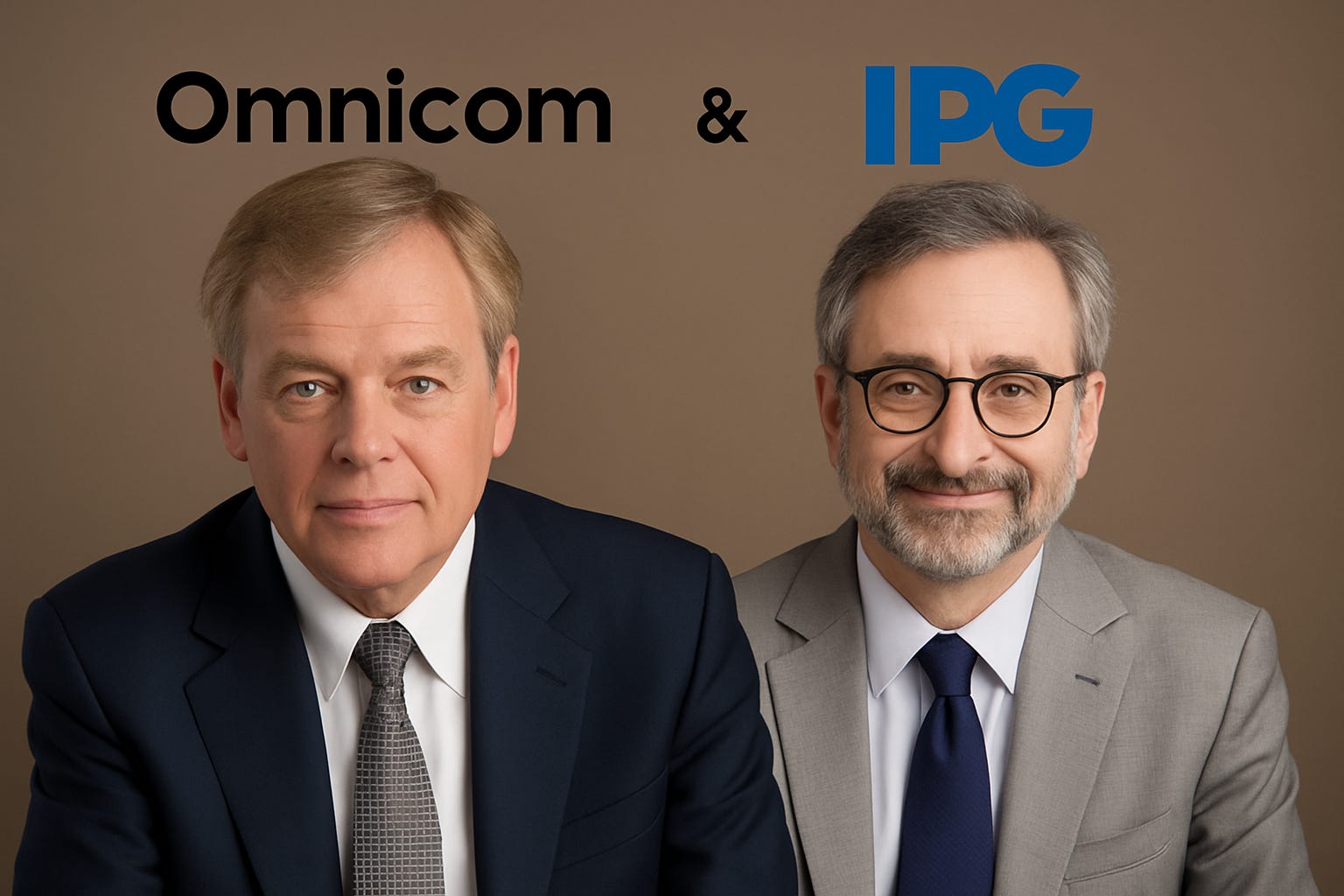
Omnicom Closes $25 Billion Interpublic Acquisition, Creating Marketing Industry Giant
John Wren's $25 billion bet on scale vaults Omnicom past Publicis to claim top spot, but integration challenges loom large
The holding company era has just entered its next chapter. Omnicom has completed its acquisition of The Interpublic Group of Companies, closing a $25 billion deal that fundamentally redraws the map of the global advertising industry. With combined revenues exceeding that threshold, the merged entity now sits atop the holding company hierarchy, pushing Publicis Groupe into second place and leaving WPP trailing in third.
The November 26 completion follows months of regulatory scrutiny across multiple jurisdictions. For John Wren, who orchestrated this combination while maintaining his position as Chairman and CEO, the deal represents the culmination of a consolidation strategy that bets big on scale as the solution to the industry’s mounting challenges.
The mathematics of the merger tells its own story. Legacy Omnicom shareholders retain 60.6% of the combined entity, with former Interpublic investors holding 39.4%. Interpublic shareholders received 0.344 Omnicom shares for each share they owned - a ratio that values the acquired company at roughly two-thirds the size of its acquirer. The combined company continues trading under the OMC ticker on the New York Stock Exchange.
Wren framed the completion in characteristically bullish terms. “This is a defining moment for our company and our industry,” he said. “With the completion of the deal, Omnicom is setting a new standard for modern marketing and sales leadership — creating stronger brands, delivering superior business outcomes, and driving sustainable growth.” Whether clients, employees, and investors share that optimism remains to be seen.
The leadership structure keeps Wren at the helm, with Phil Angelastro continuing as EVP and CFO. Philippe Krakowsky and Daryl Simm assume the roles of Co-Presidents and COO’s, while three new directors join the board. The full leadership team will be announced on December 1.
At the heart of the combined operation sits Omni, Omnicom’s intelligence platform that supposedly integrates data, creativity, and technology. The deal consolidates expertise spanning media buying, commerce, precision marketing, advertising production, healthcare marketing, public relations, branding, and experiential marketing.
The merger fundamentally reorders the holding company hierarchy. Publicis Groupe, which had positioned itself as the industry leader through organic growth and its own acquisitions, now sits in second place. WPP, once the undisputed largest player before Omnicom overtook it, falls to third. The new pecking order has immediate implications for competitive positioning, particularly when pitching for major multinational accounts where scale and global reach matter.
For Publicis, the shift represents more than wounded pride. The French holding company bet heavily on data and technology through acquisitions like Epsilon and Sapient, wagering that digital transformation would matter more than raw size. That looked prescient when consulting firms started eating agency territory. Now Publicis faces a rival with comparable tech ambitions backed by superior scale. Arthur Sadoun must decide whether to accelerate transformation, pursue consolidation, or accept a narrower competitive position.
John Wren discusses the rational of the Omnicom/IPG merger at the WebSummit 2025
The enlarged Omnicom wields considerably more negotiating power with media owners and tech platforms. In an era where buying clout translates to better rates, the combined entity’s spending power becomes a tangible advantage. Smaller rivals may struggle to match these economies of scale when pitching multinational clients.
The merger arrives at a moment when holding companies face mounting pressure. Management consultancies like Accenture have pushed into marketing services, often winning on their ability to connect strategy to broader transformation. In-house teams have gained ground at major advertisers, questioning holding company margins. Tech platforms, including Google, Meta, and Amazon command growing budget shares while offering their own marketing services.
Against this backdrop, Wren’s bet on scale makes a certain logic. If you can’t compete on agility or innovation, compete on muscle. The Omni platform provides the narrative wrapper. Whether it delivers differentiated value or simply repackages existing capabilities remains an open question.
However, integration presents substantial challenges that the company’s forward-looking statements acknowledge with unusual candour. The merger “may cause a loss of both companies’ management personnel and other key employees” and could disrupt business relationships, potentially leading to client losses. Cultural integration between two large holding companies with distinct operating models rarely proves straightforward. Anyone who remembers previous mega-mergers knows the pattern: grand promises followed by messy reality.
The combined company faces potential conflicts as it brings together agencies that served competing brands. While holding companies routinely manage such conflicts through separate networks, the enlarged portfolio may force difficult choices about client priorities. Cost synergies mean eliminating duplicate roles - corporate speak for redundancies.
Beyond integration challenges, Omnicom flagged external risks from geopolitical events, inflation, trade barriers, cybersecurity threats, AI management challenges, and evolving international regulations. The risk factors read like a tour of everything that could go wrong in modern business.
The deal closes as advertisers pull back spending amid inflation and shifting consumer behaviour. The combined company needs to prove its enlarged capabilities justify continued investment - not easy when CFOs scrutinise every line item.
With the deal complete, attention shifts to execution. The December 1 leadership announcement will offer early clues about whether Omnicom takes integration seriously or simply bolts Interpublic onto existing structures.
Whether the merger delivers Wren’s promised growth depends on integrating operations, retaining talent and clients, and adapting to technological change - all while managing inevitable disruption. History suggests mega-mergers in the agency world often promise more than they deliver. Omnicom now has the opportunity to prove that pattern wrong, or confirm it once again.


The scale vs agility trade-off here is fasinating. Wrens bet on muscle over nimbleness could work if they can actualy integrate smoothly, but as you point out, mega-mergers in this space have a spotty track record. The bit about managing client conflicts across the enlarged portfolio is understated, those situations can get messy fast. Im curious whether the Omni platform is genuinely differentiating or just good branding.