



In a new survey, just over half of adults say they trust magazine advertising. UK advertisers are still taking money out of it.
The first finding comes from The Enduring Impact of Print Advertising, the report FIPP and UPM launched at the FIPP World Media Congress in Madrid last month: 52% of the adults it surveyed consider magazine advertising trustworthy.
The second comes from the AA/WARC Expenditure Report, the quarterly measure of UK advertising spending. The overall market grew 11.0% in the second quarter of 2026. Spend on magazine brands fell 3.4% over the same period and is forecast to fall a further 5.2% in the final quarter of the year.
Trust and spend are moving in opposite directions, and the report’s authors do not pretend otherwise. Peter Houston, Publishing Director of Flashes & Flames and Media Voices, and Amanda Wigginton, the customer strategy and insight consultant who led the research, both decline to call the findings a comeback. Their claim is narrower: buyers already believe what the report says about print but are not spending as if they did.

Print is not vinyl: it never went away
Houston has little patience for the comparison with vinyl. Vinyl went away and came back, he argues. Magazines did nothing of the kind. “It’s never, ever gone away,” he says of print. He points to PwC’s Global Entertainment and Media Outlook, which puts print’s share of consumer magazine revenue worldwide at 75–80%.
Wigginton policed the language while the report was being written. “I told Peter not to use words like revival and revitalised,” she says. “This is a correction.”
The study was built to be hard to ignore. RAM Penetrace, the research firm, surveyed 1,923 adults across Europe, North America and Australia, readers and non-readers alike; the target had been 1,000. The team also drew on RAMetrics, the firm’s database of almost 3,500 print advertising campaigns from the past five years.
A second firm, Salomo, ran 100 interviews with consumers, brand marketers and agency staff, moderated by AI rather than a human researcher. The agency sample was not screened for print buyers because the aim was to see where print sits in a typical media plan. Those planners described magazines much as readers did: safer, better made, built around specialist communities. “These planners and buyers know the values,” Wigginton says. “We just need to keep reminding them.”
UPM, a major paper producer, funded the report, and it was aimed at buyers. “Believe it or not, their core target audience was advertisers and agencies,” Wigginton says, in particular the next generation of planners and buyers. Houston says the company left the conclusions alone. “They didn’t actually see it until it was more or less done and did not request any changes.”
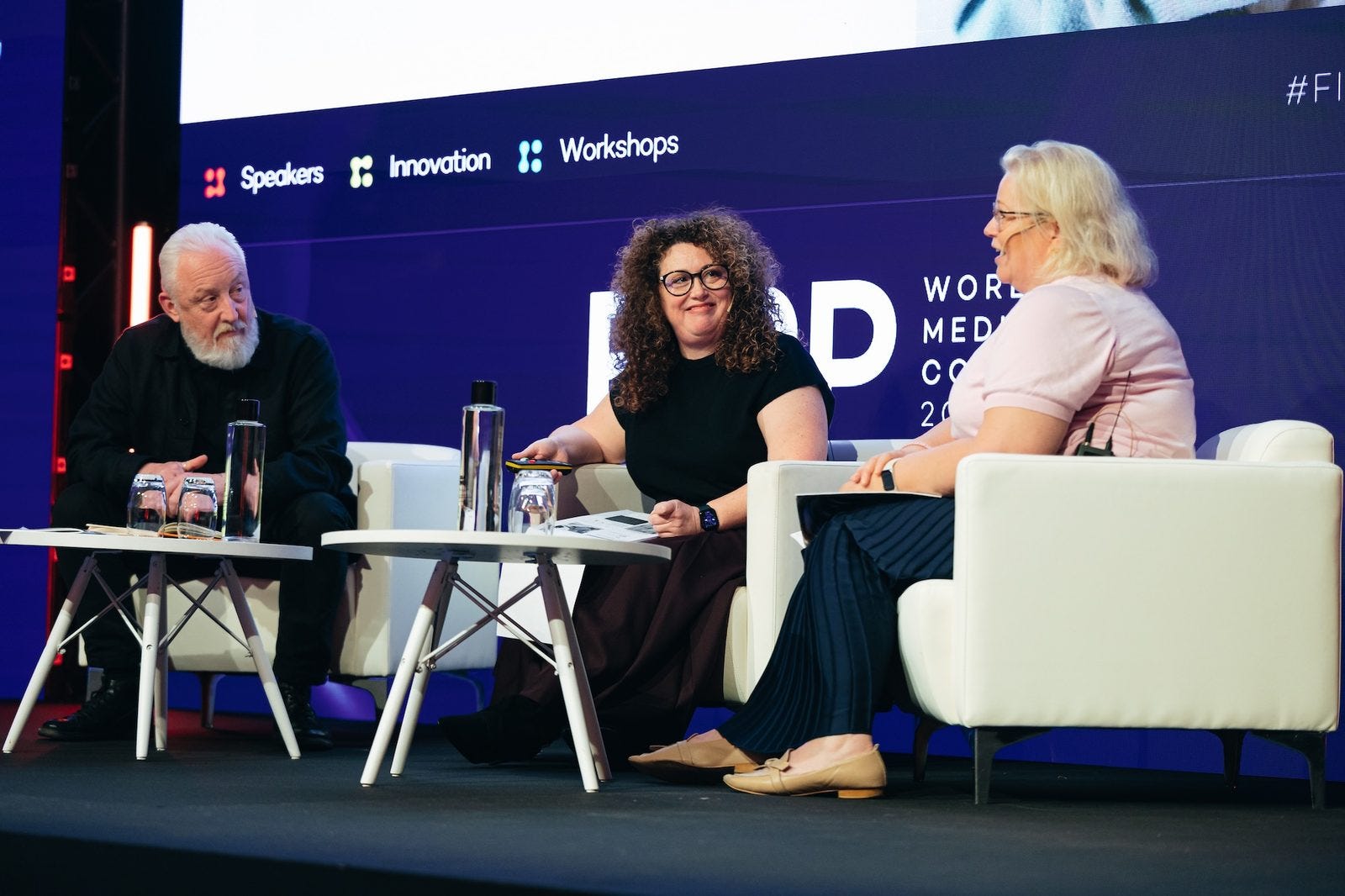
Publishers sell relationships and need honest numbers to do it
If the evidence was there all along, the question is why the market stopped looking at it. Asked who misunderstood the value of print advertising, Houston does not single anyone out. “I think everyone got it wrong.” In his account, publishers went all in on Facebook and Twitter in search of an easy fix, advertisers chased scale and targeting and mistook big audience numbers for results, and retailers cut shelf space because sales were falling, which made sales fall further.
He puts the responsibility on publishers all the same. “It’s them that’s making the product, and it’s them that have to convince people that the product’s worth buying,” he says. “It’s a publisher’s problem to change that perception,” Wigginton adds, saying it will take publishers acting together. Changing the view of print as a medium in decline needs “the united collective power of publishers”, she says, citing Atria, the joint advertising marketplace that Bauer, Future, Hearst UK, Hello!, Immediate and Time Out launched in January, as an example.
Some of the neglect was a choice. As publishers turned towards reader revenue over the past decade, he says, they spent less time promoting print advertising. Houston thinks they are now returning to it, aware that they have been “leaving money on the table”, and he wants them to return with honest figures. A title that once claimed 100,000 subscribers and now has 30,000 real ones should say so. “Those real numbers change the conversation.”
He accepts that print is harder to buy than a Google or Meta campaign, and notes that some independent publishers have responded with self-service booking forms. Automated buying, whether on a platform or through a booking form, is in his view no more sophisticated than the old business of selling pages. “Print magazine publishers don’t sell space anymore; they sell relationships,” he says. An ad on a platform, however well targeted, sits among other content until someone scrolls past. “It’s a space buy. I don’t care what anyone says.”

Magazines will not win the argument on reach
Wigginton does not dispute the AA/WARC figures so much as what is read into them. The report is a reliable forecasting tool, she says, but “it’s only a snapshot of the market”. It counts magazine brands’ print and website advertising but not what they earn on other platforms, such as social media and video, and she says the trade bodies are working with AA/WARC to change that. She argues print’s decline is levelling off, and WARC’s own forecast supports her: magazine brands are expected to fall just 0.4% in 2027.
She is candid about why budgets keep leaving. Meta is easy to do business with, and teams at the big agency groups are forever being reorganised, so the case for print must be made again to each new team. She has watched advertisers at industry roundtables accept the case for knowing where their ads appear. “Everybody will agree unanimously,” she says, “but the money still continues to go there [to the platforms].”
Her prescription is to keep making the case, as relentlessly as the platforms have. “We need to just do even more of it,” she says. “That’s what Meta and Google have done.”
Neither author is selling print on its own. “No one’s arguing for just print. No one anywhere,” Houston says. Wigginton is equally plain about scale. “We’re not going to win on reach,” she says. “Where we can win is deep, highly targeted, specialist, passionate audiences and positive environments.”
Mike Hoy makes the same argument from the production side. He is Managing Director of Papermule, whose software runs the advertising production process for publishers including the Daily Mail, Telegraph Media Group and Bauer. Mass reach, he says, used to mean a national newspaper or ITV, Britain’s largest commercial broadcaster. That model has “fragmented a million ways”, and a large audience is now hard to buy anywhere.
Print spend, by contrast, is “focused” because advertisers know who the readers are. A reader of HTSI, the Financial Times’ luxury magazine, expects to find watch advertising in it. A reader of the Sun, the mass-market tabloid, probably shops at Asda or Tesco, he says, and a Motorcycle News reader probably rides a motorbike. “It’s about marrying the advertiser with the audience.”

At the production end, publishers are planning for a longer print life
Hoy’s customers tell him that AI has disrupted traffic to their websites and undermined confidence in the accuracy of online content, sending people back to trusted brands and to print.

“While this (focused audience) isn’t driving growth in print volumes, it’s stemmed the rate of decline and appears to have significantly lengthened many publishers’ long-term view of print viability.” “It’s fair to say print advertising still forms the significant majority of our customers’ income.”
Mike Hoy, Managing Director, Papermule
If print still pays most of the bills, what separates one publisher from another is margin. The questions Hoy hears most are about cost, speed, errors and a retiring workforce. The smallest teams are the most exposed. “One person might be able to do all the work, but there’s no margin for holiday or sickness.” His remedy, standardised and automated processes, is also what Papermule sells, but the diagnosis stands on its own: print operations depend on a shrinking number of people who know how they run.
Neither Houston nor Wigginton expects a rush of money back into magazines. Houston calls the spending decline a long-term trend and hopes it is starting to flatten. Hoy’s customers plan to keep print running for longer, and they want it to cost less to produce. The report gives the industry better evidence than it has had in years. Houston and Wigginton argue that evidence was never what was missing.
Please click here to download a copy of The Enduring Impact of Print Advertising report.
