




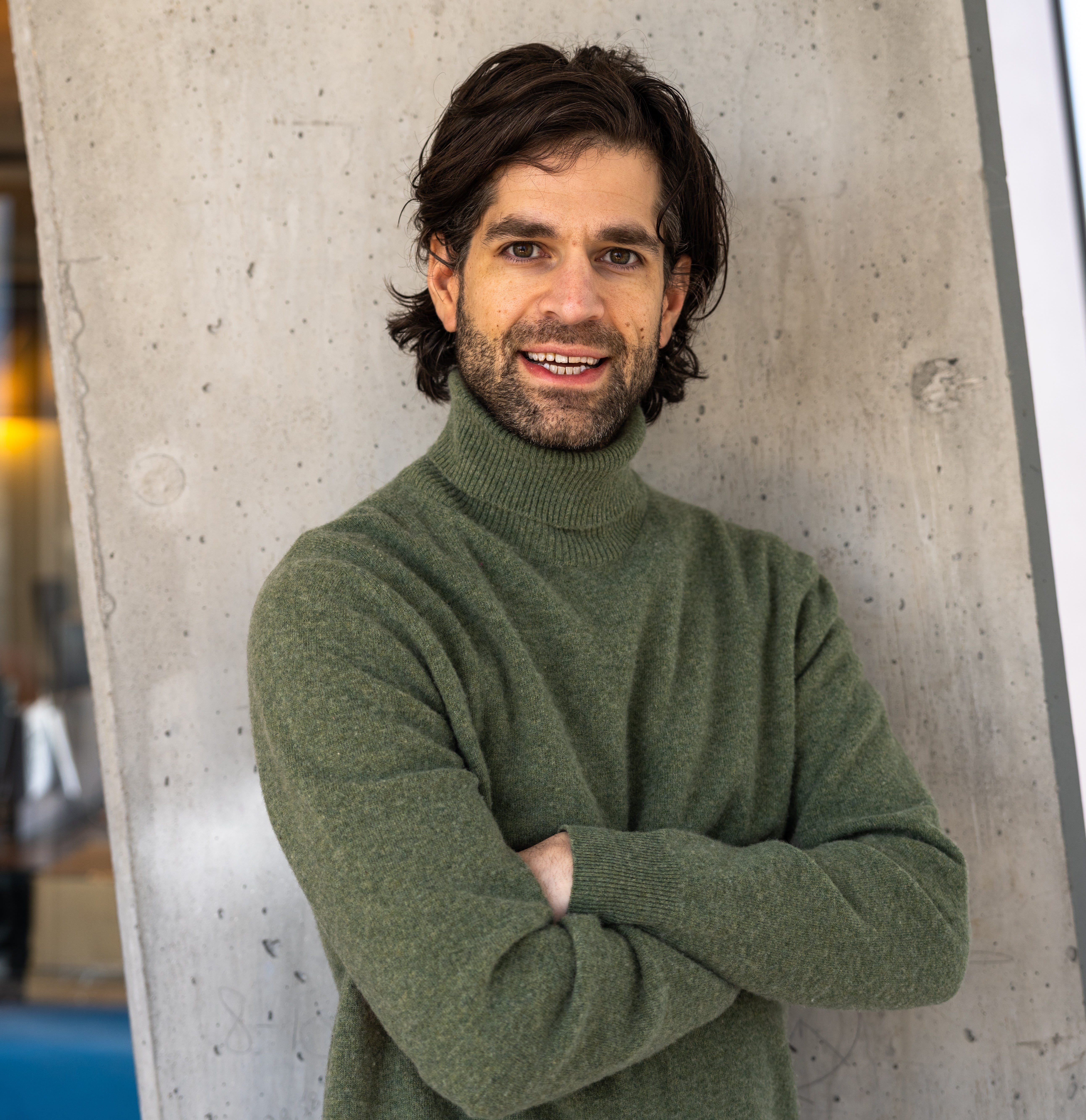
Jon Morgenstern’s job title is EVP, Head of Investment, which sounds more like a venture fund than a media agency. He knows it. “I do get confused all the time for being Gary Vaynerchuk’s VC person, for if he wants to invest in things,” he says. “I disappoint a lot of people regularly.” The reality is simpler: “Investment, in the way we use it, is a fancy term for media buying,” stretched in practice across media investment, technology, partnerships and measurement, alongside VaynerX’s own infrastructure.

The title is a small version of a much bigger problem. Organic and paid, working and non-working, influencer and creator, buyer and engineer: these are the words the industry uses to plan, price and pay for media, and the platforms are steadily emptying them out. They are also written into measurement frameworks, procurement contracts and job titles, so an industry that broadly agrees they no longer mean much still runs its business on them. Morgenstern has spent eleven years inside VaynerMedia watching it happen, and has given up waiting for anyone to supply replacements.
What a $3 CPM actually buys
The pressure lands first on measurement. A social-first agency asking for a bigger share of a budget gets one question back from the finance director: prove it. The industry’s own vocabulary makes that hard to answer. “YouTube can show up in a social line item, a TV line item, video, online video, working media, non-working media,” he says. Influencers count as working media at some brands and non-working at others, depending on how the fees are wrapped.
There is a crude way to put a number on organic: divide what the content cost to make by the impressions it earned, and call the result an effective CPM. Morgenstern rejects it outright. The method “very much under-represents the value. It assumes that an organic impression and a paid impression are equally valuable.” They are not. Cheap reach, bought at “bargain-basement CPMs, like a $3 CPM”, is inventory nobody else bid for. An organic impression is one the platform chose to serve, on the grounds that “out of everything else on earth we could serve to this user, it should be this highly relevant piece of content”.
That judgement is what makes his bigger claim work: organic performance is now the most honest research tool a brand can buy, because on this one point the platforms want what the advertiser wants. “The only thing the Metas and TikToks care about more than ad revenue is keeping people in their app, paying attention and scrolling.” Content that “passes the organic great filter” on TikTok, Reels or Shorts, where traction no longer requires followers, has survived a test no research panel can reproduce. The emphasis is on reallocating research budgets rather than abandoning research altogether: “Stop paying for as many focus groups and storyboards and all of these things that go into legacy media.”
That conclusion happens to suit an agency built on organic-first creative, and it comes at a price: if the organic filter sets the standard, the standard is being set inside Meta and TikTok, on ranking systems built to keep people scrolling rather than to grow anybody’s brand. He is less willing to apply the same doubt to the attention data he wants finance directors to treat as proof, which is the open question under an otherwise convincing case.


The contract still says 80:20
Suppose the finance director is persuaded. The contract still is not. Client appetite for change is the highest Morgenstern has seen, with the reference point now set by brands born on social: “We’ve kind of squeezed as much of the juice out of the legacy model as we can.” The blocker is procurement. Agreements still fix working to non-working media at ratios like 80:20, and creators, content production and AI tools, the things clients now want more of, sit on the wrong side of that line. “We’re not saying go to 50:50 just to be wasteful. But it requires a lot of education and consensus building. It has been getting done, honestly, because the pressure is on and folks know it intuitively.”
AI has sharpened the same standoff and flipped who is asking whom for a discount. “A lot of how it manifests itself to us is negotiating with procurement, and they’re like: we want you to be 15% cheaper, and still give us the same or better output, because AI.” He is clear about what it does to an agency that moves fast to satisfy it: “Any agency that doesn’t feel very cautious or hesitant to unleash an AI tool, they should feel hesitant.”
The negotiation may also be beside the point, because procurement rarely decides which tools get used: “If you use Microsoft Teams and Microsoft Suite, it’s going to be Copilot. We use Google Workspace, so it’s going to be Gemini Enterprise.”
Gary opens at a ten and expects to land at four
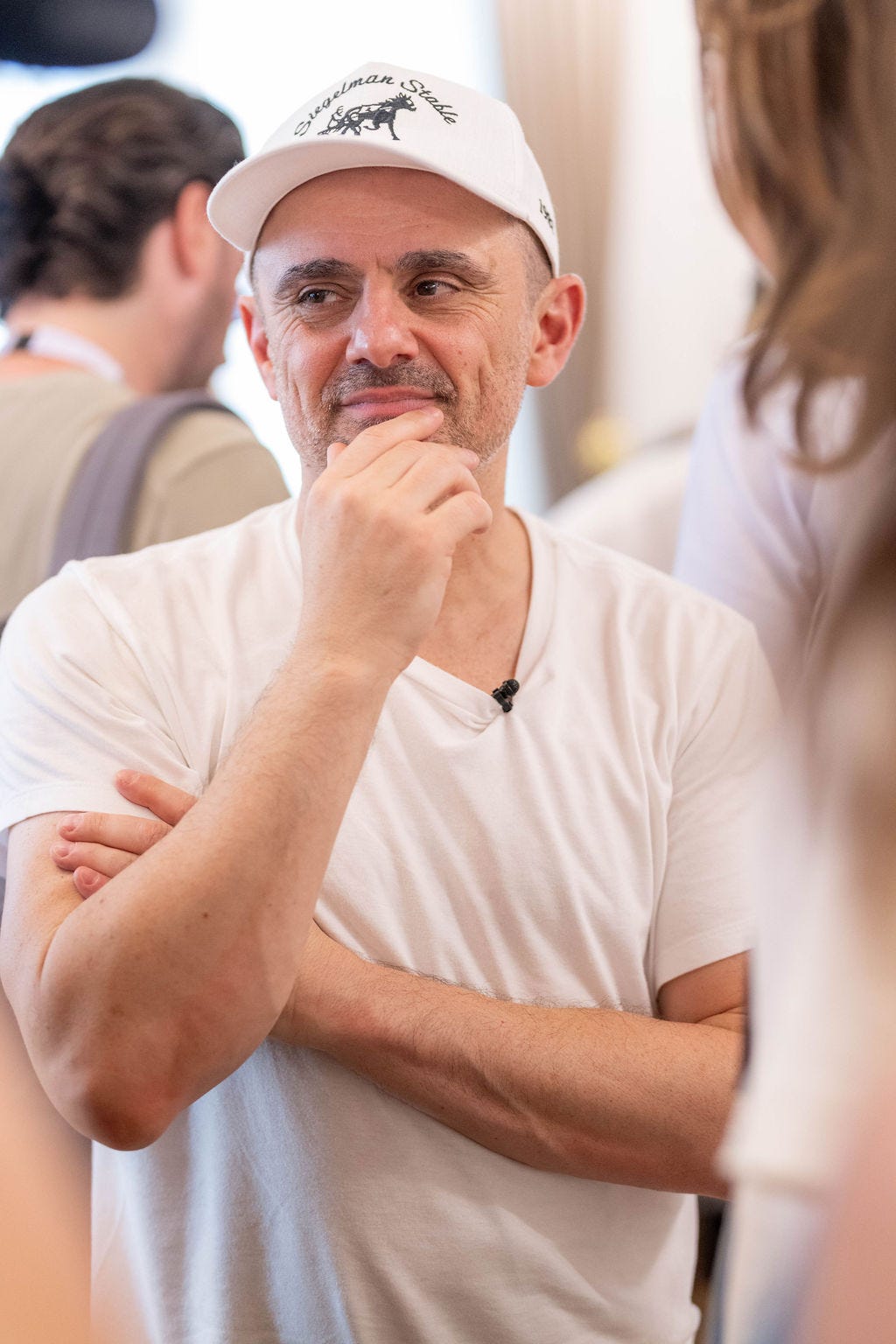
Internally, the loudest voice is the one not to take most literally. Gary Vaynerchuk’s line has long been that organic views are the ultimate measure of creative success and that television can be a waste. Morgenstern laughs at how that lands on a client call: “Gary will come in and be like: zero programmatic, no banner ads, no display. And then the media folks within Vayner are on the call with the day-to-day clients after.” He squares it with a formula: “He says the industry’s at a one, I come in at a 10, expecting it to land at a four.”
Opening high is a negotiating tactic, used on his own agency as much as on the market; you can only rip up so much of a media mix in a year.
Read closely, it is also an argument about price rather than about channels. “He’d buy any media channel or tactic, including TV, at the right price. It’s just a question of overpriced or underpriced relative to the actual demand creation. He always says these are all potential reach figures, not actual reach.” Which returns the argument to where it started: a $3 CPM is only cheap if the reach behind it is real.

The follower moat has drained
If the categories no longer hold, the transactions underneath them have to be renamed. Vayner’s creator practice is called CAIT: creators, affiliates, influencers and talent, four words for four different deals. “Influencers have media distribution. You’re paying for them to make the post and post it on their handle, to their people.” Creators are hired for the content itself, which the brand can run as paid media and measure against acquisition costs. The influencer end is changing fastest. “We’re in the non-follower era. The moat of just having a huge following, and whatever you do having that baked in. The cult of personality still matters, but share-wise, more is going to creators and talent.”
Take distribution out of the deal and what is left to buy is raw material. Vayner uses tools to find local creators near individual restaurant franchises who are “not even on the hook to film it, edit it, make it into a Reel or a TikTok, post it. Just give us the footage, and we’ll pay you for the footage.” Its own “views editors”, part of the clipping industry that has grown up around short-form video, do the rest. It removes what he calls “so much of the dead weight loss in the creator economy”.
The company keeps rebuilding around a dead category
This is not the first time the company has rebuilt itself around a category that stopped working. Morgenstern arrived in 2015 from SocialCode, when “paid social was trivial” and his biggest clients were agencies outsourcing it. What drew him to Vayner, then a creative and organic social shop, was the finger-pointing everywhere else: “we’re pulling every lever we can, the creative is the bottleneck. The creative agency would be like, well, we delivered beautiful creative. Your media buying shop must be screwing up. No accountability.” That grievance became the pitch. “When we have both, we are accountable. There’s no one to point to but us.” Integration is unremarkable now; in 2015 it was a way of taking away everybody’s alibi.

The second rebuild finished this year, in what he calls “this big growing up of sorts”. In January, The Sasha Group became ChukMedia, “now really a proper conflict shop”; in April, VaynerX added Tamara Group, built largely from Gallery Media Group’s publishing operation. The driver was conflict, and the separation cost more than expected: “we might want two clients in this certain category, but really need to be airtight and do the whole actual separation, which is more involved than I certainly realised.” An agency that can hold two rival accounts in the same category is being paid for something other than a channel remit, which is the 2015 bet made bigger.
The media buyer becomes a systems plumber
The last category to dissolve is the one on Morgenstern’s own trade. A decade ago, serious dynamic creative work needed an engineer or an ad tech vendor. Now, he says, the future media buyer swaps manual spreadsheet work for code:
“More of an engineer, or a systems plumber. True deterministic: this report will be this way every time. There’s no ‘LLM, what happened here?’”
The rule inside Vayner is “human upfront, human at the end”: the briefing, strategy and context go in, a person checks the work and presses go, and the boring middle gets automated first.
He has been here before. In 2011, before newsfeed ads existed, Facebook advertising had no playbook. “We were writing the rules and figuring it out with clients, and it was fun. That’s kind of where we’re at today with AI. … Everyone’s waiting for someone else to say go.” His advice is blunt:
“Everyone’s like, hey, where’s the manual? And it’s like: no, no, there isn’t one. It needs to be written. You have to write your own. It’s walled garden 101. Of course you should listen to what any Google, Meta, or OpenAI tell you, but it’s their business; they’re trying to maximise. Agencies exist to steward.”
Jon Morgenstern
Every category Morgenstern has watched dissolve since 2015 took a manual down with it, and each time the industry’s instinct has been to wait for a replacement from the same platforms that removed the old one. Measurement, contracts and job descriptions are all still written in the old words. “Had we not evolved, we’d be in trouble,” he says. “Standing still is definitely death, more than ever.”