

Nic Newman of the Reuters Institute of Journalism put a figure in front of WAN-IFRA’s Digital Media Europe Conference on the first morning, and it hung over both days: one Briton in ten pays for online news, against four in ten in Norway, and the trend has not changed. The people willing to pay are mostly paying already. So, every session, whether the speaker put it this way, was answering the same question: if readers won’t pay more, who else will? Four answers came back.
Football fans, who may not stay
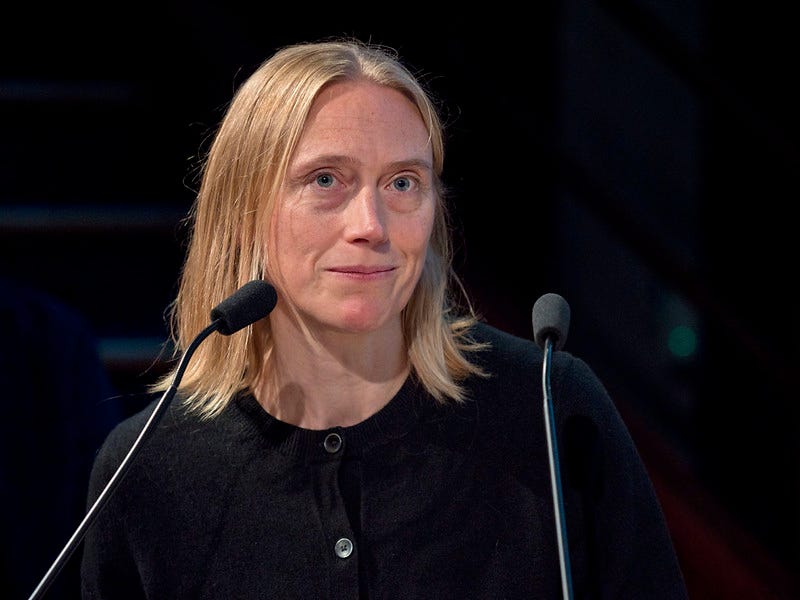
Liz Wynn, the Guardian’s Chief Supporter Officer, set out the limits of her own model. The Guardian’s pitch for money has been the same for a decade, a free and independent press, and it has produced 1.4 million supporters. “Football audiences are not so motivated by all of our arguments around free press,” she said. So, for the World Cup the pitch became “every moment, every match”; the call to action was the app, and creators booked through agencies carried the campaign on social. Football Weekly topped the sports podcast charts for 17 days and roughly doubled its listening. Wynn did not claim to know whether readers who signed up for football would stay for the news content.
The Athletic went further and dropped its paywall for the tournament. It opened its coverage to non-subscribers and ran a live blog on every match. A download wall, steering readers to the app rather than the website, delivered 40,000 extra downloads at the cost of far fewer web registrations, and readers who installed the app stayed at five times the rate of those who did not.
The threshold that predicts whether they stay, the audience team said, is two visits a week. Wynn’s new readers came for football; The Athletic’s came for a tournament, which is worse. Readers who registered during the tournament have since come back less often than those from other events, because many followed countries it generally does not cover.
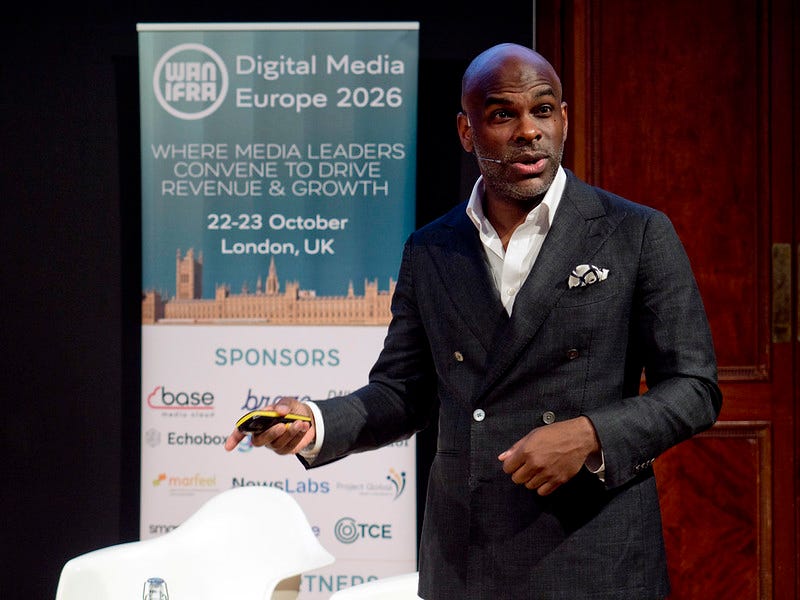
Footballco gave up on the reader paying some time ago. Its sites and apps drew 115 million users and more than a billion page views during the tournament, Chief Executive Juan Delgado said, and none of them pays. Nor, increasingly, do banner advertisers. The $100m business comes from sponsors, retailers and broadcasters: a $15m Kia campaign across 13 countries, commissions on tickets and streaming subscriptions sold through its pages, and $2m from alternate jerseys. “The way we make money now is based on so many mediums and so much distribution,” he said.

Readers of The Media Stack can save 15% use this code
NRS26MEDIASTACK
People who have never paid, and want something other than articles
Tor Jacobsen, who joined DMG Media from Schibsted in March, must find 600,000 more subscribers for the Daily Mail by October 2028, having passed 400,000 in April. “I think most of them will come from totally new people coming in,” he told Newman: people who have never paid for news. At Schibsted, article subscriptions plateaued, and growth came from video, audio and adjacent products. The Mail’s more immediate problem is that it puts about 30 articles a day behind the paywall, even though the site publishes more than a thousand. “If you don’t have more paid content, you’re not able to convert people to subscribe.”
Actu.fr has the same problem at local scale: eight years of free, then a paywall. Amandine Briand’s account was mostly about the newsroom. Journalists chose what went behind the wall, with a rule that 30% of content should be paid and a year’s trial at one daily title before the rest followed. The audience did not fall, and subscribers spent seven minutes on the site, compared with two for everyone else. The hard part, she said, is getting journalists to judge a story’s value from the reader’s side instead of by how much work it took.
On day two, Il Post and El Orden Mundial showed what Jacobsen’s adjacent products look like when they work. Il Post’s daily podcast, Morning, converted 70 to 80% of its free listeners when it moved behind the membership, and listening now predicts renewal; 120,000 members provide 78% of revenue at €9 a month with no discounts. El Orden Mundial’s two-hour geopolitics podcast produced the fastest growth in the company’s history. Where the Guardian paid creators to find new readers, Gianni Barlassina, Il Post’s General Manager, has paid twice to buy subscribers, through a telecoms partner and through digital advertising, with the same result both times. “You pay a lot of money for very, very little results.”
Advertisers, who want the readers the subscription team already has
On both days, the people who sell advertising described the same shift: the readers advertisers will pay for are the ones who already pay the publisher. David Bradford, Bloomberg Media’s Managing Director for Europe, grew advertising revenue 11% last year without adding to his sales team, and credits the paywall. Because Bloomberg’s readers pay and log in, it knows who they are. “If anything, it has really been to our benefit,” he said. If Bloomberg got anything wrong, it was offering too much choice: the product that lets advertisers pick audience segments offered too many options and spread the ad space too thin, so it is being simplified.
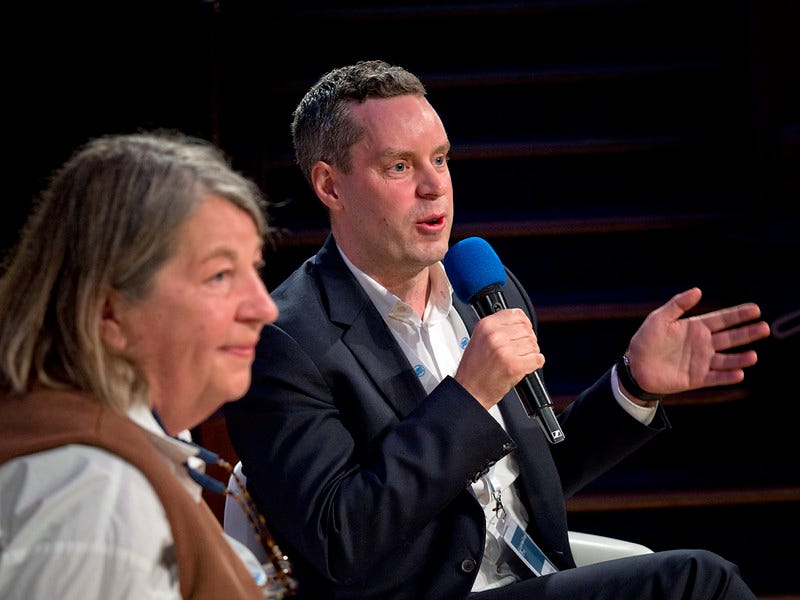
Jacobsen, asked whether the Mail’s advertising team feared the paywall, said it had not: subscribers are the heaviest users and bring the data advertisers want. “The tension is not so big, to be honest.” Aled John, who runs group strategy at the FT, has reorganised the company on that assumption: every reader-revenue business in one group, every advertising-led business, FT Live included, in another, so that one sells to readers and the other sells those readers on.
The machine, on terms nobody has settled
The last candidate payer does not visit the site at all. Fewer than 4% of ChatGPT queries are about news, Ezra Eeman, WAN-IFRA’s Director of AI in Media, told the first day’s session on AI assistants, yet news publishers supply about a third of the sources cited in AI answers, because journalism gets used inside other tasks. The FT is already charging that intermediary. It licenses content to OpenAI, sells enterprises a direct feed of its archive, blocks automated copying daily (one address tried to reach its pages a million times in 24 hours) and co-founded SPUR, the publishers’ group seeking common terms from AI companies. “We need collective action,” John said. Corporate clients, he added, are starting to move information budgets to AI tools.
Being paid that way has an editorial cost, Dmitry Shishkin argued. Shishkin, the independent advisor who developed the user-needs model at BBC World Service, proposed eight tests of whether an article is ready for AI agents to use and had practitioners score a BBC article at 15 out of 24. “I don’t at all agree with people who say let big tech companies figure it out for themselves.”
Two days produced no settled price. Football fans may not stay, the never-payers want audio and video, and advertisers want subscribers, which only helps publishers who already have them. The machines, meanwhile, are reading everything already, on terms that the people meant to set them admit they are still working out.